So yesterday got to chatting with FB friends about this article from the BBC: US Nuclear Force Still Uses Floppy Disks.
If you're anything like me, I'm pretty sure the first thing you thought of when you read this headline was Homer Simpson:
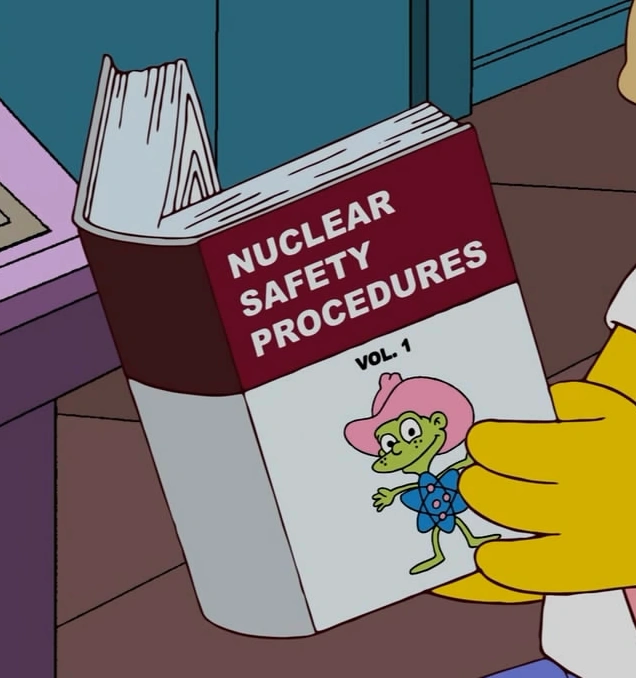
But this isn't just funny trivia for "news of the weird;" there is an actual point: digital records keeping is not as robust and cheap and easy as everyone thinks. That's because most (all!) of us think about digital records in the short term: my credit card payment receipts, my blog posts, my portfolio of html, whatever. Slap 'em on a hard drive, put 'em in GoogleDrive, done. And for most individual purposes, that is OK.
It is not OK, however, when you're talking about records of enduring value. We've probably all ALSO had this experience: "Oh, man, where is that file from 2002, the database of donors?" Oh, it's right here on this ZIP disk. Where's the drive? Um.
Or maybe you do have the drive still. Awesome! So you pop it in, rockin' right along, and then you realize all the files are WordPerfect. Or Lotus 1-2-3. Or VisiCalca. Or file extension .001, whatever that is. Do you still have that program? Heck, does it even still work with your current operating system?
Some libraries and archives (and museums) will keep legacy hardware (and OS and software) up and running so that you can still access historic digital records, but this is a cost-intensive approach, as the article about the nuclear floppies also mentions. Keeping all that old hardware up and running is expensive, especially once you have to do it all in-house, as support is no longer provided by the creators and replacement components may or may not be available.
None of this is insurmountable. You just need to migrate stuff, refresh media, backup like crazy, and so forth, right? Yeah, basically. It can certainly be done--barring any weird restrictions on where and how things can be stored and, especially, duplicated. You don't want to store stuff for the Dept. of Defense containing sensitive/classified info on cloud services mirrored on servers in other countries, for instance. And I think I've mentioned before, some state statutes specifically mandate what formats of certain documents can be considered legally-binding--if only paper and micro-formats, like fiche, are referenced as being an acceptable originals, you may not be able to use your PDFed versions for certain, usually high-stakes, applications. Changing file formats may also have implications for legal admissibility, as it will alter metadata and thus checksums, used to monitor e-records for changes and thus demonstrate maintained authenticity.
Again, this can all be worked around, but NONE of it is cheap. It requires tools (multiple secure and duplicate servers; maybe also cloud space if you can get the security up to snuff) and, most importantly, lots and lots of staff time. Frankly, that's true for both maintaining-as-legacy and converting, but current models suggest that converting to standardized formats, regular conversion, and avoiding physical media (CDs, disks!) ends up being cheaper in the long run, with less data loss. (Exception: converting from analog media, like microfilm, to digital media, has not been shown to be cheaper, for preservation copies. Your access copies can be digital, no problemo: they'll be subject to wear-and-tear, but that also don't have as many security and authenticity issues, because you can always backtrack to your security/preservation copy for, say, a certified copy, if needed. That's why a lot of archives STILL keep master copies of permanent-retention records on film or fiche.)
And so, the US Nuclear Force is still using those floppies. The Treasury, also referenced in the article, is using software written in assembly language code, and thus tied to specific (now antiquated) hardware. State governments are working in obsolete or on-the-cusp software that can't play nicely with modern OS and that are not accessible to constituents. Email retention policies are either non-existent or not understood, enforced, and supported (as in the Hillary Clinton email scandal, which apparently really also involves all former Secretaries of State, as well).
This means two things: our government is not working efficiently, and what should be open records made available to any interested constituent may not be being preserved in any accessible or meaningful format. And I'm not saying this to criticize or ridicule the government or, still less, its employees. In my experience, government employees are doing their best, but in this era of increased emphasis on "smaller government" and cutting budgets, the government and its workers are being less and less empowered to obtain the tools they need to do their jobs. If you can't afford to replace your DOS-based system from the 1980s, your office keeps limping along and trying to provide services even though you can't even run the darn program on a computer with fast (by current standards) processing speeds. If you're an archive whose budget is tied to selling photocopies (cough cough), it's frankly going to be hard to make enough money to buy or rent server space to store e-records on. And if you have nothing to store e-records on, you just plain don't retain e-records. How can you? So those documents, and the associated government accountability and transparency, goes out the window.
Don't get me wrong. I'm not lobbying for, you know, free caviar for all government employees ever Friday or photocopiers with built-in espresso machines for all government offices. But if you want the product, you have to give the workers the necessary tools. Archives budgets in particular are among the first impacted in any round of budget cuts; people need to realize that that means that they simply can't provide an adequate level of service without some very basic necessary tools. No server; no emails; no transparency. And that's bad for all of us.
Friday, May 27, 2016
Thursday, May 19, 2016
Colorado open data at the end of the 2016 legislative session
Good and bad news for Colorado open records and open data this session, and also a "good" reminder about working for open data through other channels.
Good news: HB 16-1368 passed! I know, does that sound exciting or what? No, if you'll remember, that was the bill addressing the operation of the Colorado State Archives. You can read the whole confusing mess, from the draft submission, to the votes, to the amendment, to the report of it passing the House and Senate, through the General Assembly's website. (The website is terrible; you have to be sure to go to the drop-down in the middle of the page, where it says "select bill range" and choose "House Bills 1351-1400" and click "Go" to get to the page where you can access all the relevant PDFs.
So that is excellent news! The Archives' just-passed bill did not fix everything (like emails), but it did smooth out a lot of processes and invest the Archives with more capacity to make decisions pertaining to records management, cutting down the bureaucratic maze that used to be part of the records management process. That means more product with less time, and thus money, wasted. Clearly more improvements are needed (e-records!), but this bill was an important step in the right direction, for enabling the State Archives to function more efficiently and to regain some control over the state records for which they are responsible.
But one hand giveth and the other taketh away, so now for bad news: I feel like Rocky Mountain PBS News' article's headline pretty much sums it up: Colorado Legislature Mostly Misses in Improving Government Transparency. It's particularly disappointing with reference to the Judicial branch: notice anything funny about the sentence "State courts have ruled that Colorado’s judicial branch is not covered by CORA[...]?" That's right: "We decided that we are not subject to the law." You can't exactly blame them, but you can blame the other branches of government (particularly the legislative) for not doing their job of checking-and-balancing. But kudos to Sen. John Kefalas (D-Fort Collins) for sponsoring SB 16-037, which attempted to bring up-to-date at least some of the CRS' treatment of digital/e-records. It sounds like Colorado Freedom of Information Coalition is continuing to work on similar compromise legislation for next session, so hopefully that will continue to move forward.
And here's a reminder: even though the legislature is, in many ways, dragging its feet about open records and freedom of information, some other branches of the government are really doing their best to make data available. First and foremost among these is GoCodeColorado, which operates out of the office of the Secretary of State. They run a neat coding challenge annually (hopefully next year I will have advanced enough in programming to participate!). What's particularly interesting and relevant to open data, however, is that the coding challenge involves use of publicly-available government data sets. It's different from open government records, obviously, but also similar. So because GoCodeColorado has an interest in having these data sets available for their coding challenge, they have been working with a number of other agencies to get those agencies' data sets up and freely available, as well as finding and linking to other data sets through nonprofits and the like. So it's a great program, and you should definitely check it out!
Also, shouts-out to OpenColorado (which doesn't look particularly active right now?) and Colorado Data Engine.
Good news: HB 16-1368 passed! I know, does that sound exciting or what? No, if you'll remember, that was the bill addressing the operation of the Colorado State Archives. You can read the whole confusing mess, from the draft submission, to the votes, to the amendment, to the report of it passing the House and Senate, through the General Assembly's website. (The website is terrible; you have to be sure to go to the drop-down in the middle of the page, where it says "select bill range" and choose "House Bills 1351-1400" and click "Go" to get to the page where you can access all the relevant PDFs.
So that is excellent news! The Archives' just-passed bill did not fix everything (like emails), but it did smooth out a lot of processes and invest the Archives with more capacity to make decisions pertaining to records management, cutting down the bureaucratic maze that used to be part of the records management process. That means more product with less time, and thus money, wasted. Clearly more improvements are needed (e-records!), but this bill was an important step in the right direction, for enabling the State Archives to function more efficiently and to regain some control over the state records for which they are responsible.
But one hand giveth and the other taketh away, so now for bad news: I feel like Rocky Mountain PBS News' article's headline pretty much sums it up: Colorado Legislature Mostly Misses in Improving Government Transparency. It's particularly disappointing with reference to the Judicial branch: notice anything funny about the sentence "State courts have ruled that Colorado’s judicial branch is not covered by CORA[...]?" That's right: "We decided that we are not subject to the law." You can't exactly blame them, but you can blame the other branches of government (particularly the legislative) for not doing their job of checking-and-balancing. But kudos to Sen. John Kefalas (D-Fort Collins) for sponsoring SB 16-037, which attempted to bring up-to-date at least some of the CRS' treatment of digital/e-records. It sounds like Colorado Freedom of Information Coalition is continuing to work on similar compromise legislation for next session, so hopefully that will continue to move forward.
And here's a reminder: even though the legislature is, in many ways, dragging its feet about open records and freedom of information, some other branches of the government are really doing their best to make data available. First and foremost among these is GoCodeColorado, which operates out of the office of the Secretary of State. They run a neat coding challenge annually (hopefully next year I will have advanced enough in programming to participate!). What's particularly interesting and relevant to open data, however, is that the coding challenge involves use of publicly-available government data sets. It's different from open government records, obviously, but also similar. So because GoCodeColorado has an interest in having these data sets available for their coding challenge, they have been working with a number of other agencies to get those agencies' data sets up and freely available, as well as finding and linking to other data sets through nonprofits and the like. So it's a great program, and you should definitely check it out!
Also, shouts-out to OpenColorado (which doesn't look particularly active right now?) and Colorado Data Engine.
Programming as a Helping Profession: Social implications of Big Data
I wish I could find the source I read it from, but basically, it is a not-uncommon-assertion that women are underrepresented in programming because women are generally interested in the so-called helping professions, and programming/CS is not generally perceived as a "helping profession." Now obviously we could haggle about why women are disproportionately represented in the "helping professions" (hint: socialization!), but the whole reason I bring this issue up is that I want to make this post about a case where something perceived as very mechanistic and soulless technology does in fact have social implications in an unexpected direction. (Here's an older blog post from EduCause Review about this whole "helping-professions" suggestion, in case you missed it the first time around.)
So now I'm all attuned to "how can tech fields actually function to address social issues, beyond building websites for nonprofits?" Trying to keep an eye out for examples, and a couple of weeks ago, The Atlantic ran the article How Big Data Harms Poor Communities, which is a good start. At first, I was all, "OK, great, someone took a buzzword and problematized it. Next article." But it actually makes some good and non-obvious points.
The author's contention is that Big Data gets disproportionately collected on poor communities, particularly with the indigent and those with run-ins with the law (cue Urban Camping ban controversy, here in Denver, for instance). Moreover, because of how that data is managed (e.g., badly), old data, including that which should have been expunged, may persist, and may impact the lives of real people in the real world, for instance, by impacting credit availability. The author's conclusion is, basically, that without human oversight, Big Data, rather than (or in addition to) providing all the benefits that have been promised, can contribute to systems of oppression that keep poor people trapped in a cycle of poverty and lack-of-opportunity.
Now, can only women do "helping profession"-style programming? Obviously not. But I thought this post was worth sharing, if only for me, as a reminder of one way in which programming can be a tool for social justice, beyond, say, making websites for nonprofits. As I find more examples, I'll try to remember to slap 'em up here. As a fledgling programmer myself, it is good for me to start building a model in my head of how, concretely, programming can be a socially-useful tool, rather than one solely or primarily for military, corporate, or edutainment purposes. (And I don't mention scientific applications anywhere here, because those positions are obviously cool, although they can be more rarefied and abstracted, as well.) And not that women can't be interested in those fields, but the research to date suggests that more women would (might?) be interested in programming/CS with more of a social-good application.
Friday, May 13, 2016
Spoiled rotten bunnies!
Oh my gosh, guys, I have had "blog!" on my to-do list for...all week. And here I am!
Well, only sorta.
'Cause ALSO on my to-do list, ahead of "blog," is "finish the three remaining exercises in your Python class and move along!"
So after 10 hours on one of the three--which is now successfully completed, BTW, after I have exhausted possibly every possible INCORRECT permutation of methods etc., and one correct-but-not-using-the-method-specified--is done. But two are not. So, it's going to be a short blog post today, so I can get back to some Python + JSON fun!
And the topic? Spoiled rotten bunnies! Everyone's favorites!
Actually, it's just a tip: bunnies are very grateful when I remember to grow them some tasty grass inside! Since we have to be careful about not feeding anything that might have been exposed to pesticides or herbicides, it's easiest/safest to grow our own grass. And it's super easy.
We used wheatgrass (this one, from Botanical Interests, specifically); our greenhouse doesn't have wheatgrass this year, but they do have catgrass, which we may try. For the wheatgrass, it is recommended to soak it for something like 8 hours before planting. So start it soaking the night before, then plant the next morning (or evening; whatever floats your boat). I just use a normal ol' potting soil. It takes, oh, maybe a week to have enough grass to feed?
For me, the trickiest thing is planting in such a way that if I give the whole pot to the bunnies to let them graze, they have a tendency to yank the whole plant up, roots and all. Maybe I am not planting them deeply enough, or possibly just sowing too densely (so that a root mat is created, so when one is pulled up many come up together?). Anyway, something to be aware of. As you can see, from this particular pot, I've been trimming for them and then just giving them to the bunns as a snack. This method is working out pretty well, because I've gotten at least three feedings of grass (just keep watering, and leave it by a window!); hopefully we can keep this going for a good long while!
Well, only sorta.
'Cause ALSO on my to-do list, ahead of "blog," is "finish the three remaining exercises in your Python class and move along!"
So after 10 hours on one of the three--which is now successfully completed, BTW, after I have exhausted possibly every possible INCORRECT permutation of methods etc., and one correct-but-not-using-the-method-specified--is done. But two are not. So, it's going to be a short blog post today, so I can get back to some Python + JSON fun!
And the topic? Spoiled rotten bunnies! Everyone's favorites!
![]() |
| Tasty delicious wheatgrass! |
Actually, it's just a tip: bunnies are very grateful when I remember to grow them some tasty grass inside! Since we have to be careful about not feeding anything that might have been exposed to pesticides or herbicides, it's easiest/safest to grow our own grass. And it's super easy.
We used wheatgrass (this one, from Botanical Interests, specifically); our greenhouse doesn't have wheatgrass this year, but they do have catgrass, which we may try. For the wheatgrass, it is recommended to soak it for something like 8 hours before planting. So start it soaking the night before, then plant the next morning (or evening; whatever floats your boat). I just use a normal ol' potting soil. It takes, oh, maybe a week to have enough grass to feed?
For me, the trickiest thing is planting in such a way that if I give the whole pot to the bunnies to let them graze, they have a tendency to yank the whole plant up, roots and all. Maybe I am not planting them deeply enough, or possibly just sowing too densely (so that a root mat is created, so when one is pulled up many come up together?). Anyway, something to be aware of. As you can see, from this particular pot, I've been trimming for them and then just giving them to the bunns as a snack. This method is working out pretty well, because I've gotten at least three feedings of grass (just keep watering, and leave it by a window!); hopefully we can keep this going for a good long while!
Wednesday, May 4, 2016
Sorry for apologizing all the darn time!
Rats, I did it again. Sorry.
No, wait. NOT SORRY. That is the theme. It is an issue that keeps popping up, so I figured I'd slap it in the ol' blog.
Over-apologizing, specifically by people of the female persuasion.
Just over a month ago, I started (round two) of tennis lessons. I took some a couple of years ago, then I had that job with the long commute and I couldn't make any lessons offered locally, so I dropped it. So I'm getting back into it, which is good, I guess. But guess what? Can I hit the darn ball? Only about 50% of the time. But I can apologize 100% of the time! And I am really, really good at apologizing. When I actually do something bad. When I make a harmless mistake. When I am trying to be non-threatening. When I am trying to "encourage" someone apologize to me--like, if I do it, maybe they'll do it, too?!? Yeah, isn't that something?
So my tennis-lesson colleague, Tara, and I made a pact: no more gratuitous apologizing. If we miss it or shoot it way the heck over the fence and into the road or whatever, we do not apologize. We just walk it off! Unless you actually serve into someone's back. Then you can say "sorry." (Sorry again, Tara.) Old habits die hard. I accidentally apologized, like, five times at our last practice. But I am not sorry about it.
And then this really great article shows up on FB: Raising Confident Girls: When Apologizing is Not a Good Thing (PBS Parents). You can read it yourself; you don't need me to paraphrase it for you. But basically, girls "outperforming" boys at apologizing, and being expected and socialized to do so. And conflict avoidance. LOTS of conflict avoidance.
And then today, I see this nifty article about girls' and women's rock camps in the Twin Cities. (One of my buddies teaches for them.) The article: These Girls Rock (St. Louis Park magazine). So I'm all reading along, happy about rock music and so forth, and then: "The teachers go through the rules of camp on day one, performed in skits, and 'one of the rules is you’re not allowed to apologize,' Case says. 'You say, "I rock!"'"
So now I have something to say when I flub another tennis ball. "I rock!"
In the interest of transparency, however, I was not listening to rock music when writing this. I was listening to yodeling.
No, wait. NOT SORRY. That is the theme. It is an issue that keeps popping up, so I figured I'd slap it in the ol' blog.
Over-apologizing, specifically by people of the female persuasion.
Just over a month ago, I started (round two) of tennis lessons. I took some a couple of years ago, then I had that job with the long commute and I couldn't make any lessons offered locally, so I dropped it. So I'm getting back into it, which is good, I guess. But guess what? Can I hit the darn ball? Only about 50% of the time. But I can apologize 100% of the time! And I am really, really good at apologizing. When I actually do something bad. When I make a harmless mistake. When I am trying to be non-threatening. When I am trying to "encourage" someone apologize to me--like, if I do it, maybe they'll do it, too?!? Yeah, isn't that something?
So my tennis-lesson colleague, Tara, and I made a pact: no more gratuitous apologizing. If we miss it or shoot it way the heck over the fence and into the road or whatever, we do not apologize. We just walk it off! Unless you actually serve into someone's back. Then you can say "sorry." (Sorry again, Tara.) Old habits die hard. I accidentally apologized, like, five times at our last practice. But I am not sorry about it.
And then this really great article shows up on FB: Raising Confident Girls: When Apologizing is Not a Good Thing (PBS Parents). You can read it yourself; you don't need me to paraphrase it for you. But basically, girls "outperforming" boys at apologizing, and being expected and socialized to do so. And conflict avoidance. LOTS of conflict avoidance.
And then today, I see this nifty article about girls' and women's rock camps in the Twin Cities. (One of my buddies teaches for them.) The article: These Girls Rock (St. Louis Park magazine). So I'm all reading along, happy about rock music and so forth, and then: "The teachers go through the rules of camp on day one, performed in skits, and 'one of the rules is you’re not allowed to apologize,' Case says. 'You say, "I rock!"'"
So now I have something to say when I flub another tennis ball. "I rock!"
In the interest of transparency, however, I was not listening to rock music when writing this. I was listening to yodeling.
Subscribe to:
Comments (Atom)

