Just a quick and short blurb: folks are now in a tizzy because "Leaked Colin Powell emails fault Trump and Clinton." And that is interesting and exciting and so forth.
But I can't believe that folks aren't picking up more on this: "Among Powell’s emails, however, are comments that reflect that he too sought to use private email as a way to avoid creating documents retained by the government. Decrying 'friggin record rules,' Powell wrote [blah blah less relevant stuff]" These "friggin' record rules" are, in fact, citizens' best recourse for government transparency and oversight.
And it's what I've been saying for months: citizens have to make some noise, because our elected officials--those who oversee archives and ensure their funding--are the ones who have the most to lose by having their own records retained and publicly available. We're the ones who gain from that. So we need to make sure our elected officials know that we care. It's all fun and games to blame the archivists, but frankly, the archives doesn't have an enforcement mechanism; we have no teeth, in the politics game. So constituents have to make this enough of an issue that elected officials stay honest, at least as far as their records go.
Wednesday, September 14, 2016

Following up on ally-ship
I've been thinking some more about the issue I discussed in "Who to contact, what to do: ally-ship for #blacklivesmatter"....in July. (Sorry; went to KY and got stranded in the Southwest cancel-a-thon, and then everything in the house broke [slight exaggeration], and I've been swamped with organizing roofing and water heaters and trimming dead trees and so forth.)
And a few things have occurred, or occurred to me.
Thing that occurred to me: I was really struggling with the whole issue of black folks not having to explain things to would-be allies. And I still think it's important, as allies, to remember that folks of color are really the ones "driving" this movement, and so asking is still good. But I guess the resolution I came to is that racism is not a problem that just affects folks of color. White folks like me also have an experience of racism....but it's an experience of normalizing racism, not seeing it, not exploring it, and not realizing--willfully or otherwise--the ways in which we are implicated in it or in which it is enacted through us (or not prevented by us). So I don't need to ask a person of color about the sorts of racism that I experience, as a(n unintentionally-) constituting party or factor: I should be able to figure at least some of those out myself.
So definitely still ask, when the opportunity is there. But also examine your own experience for things you haven't done for equality and civil rights. It'll be painful, but there are parts of this that we can figure out, and that we don't have to have folks of color explain to us. (Unless, any people of color who might be reading this, you want to.) And we can start working on those parts, through ourselves, in addition to supporting the movement with black leadership.
And related-ly, I am reading Eduardo Bonilla-Silva's Racism Without Racists (4th ed., now with a chapter about Obama!), and trying to take it in the manner in which it was intended--as a "good, honest, and painful sermon," to quote Samuel Pepys. I'm still reading and processing, but he is making the case for the notion of "I don't see color" as "color-blind racism," which is to say, a more covert and insidious form of racism that essentially relies on claims of neoliberalism (competition; a free market of candidates, schools, housing, etc.) and the fact that things used to be worse to undermine any further progress on social justice and civil rights. So far, I'm having trouble figuring out if and how what he's arguing--which makes sense, as a description of the general system--has to do with me, daily, on the ground. (And note: I don't think 'I don't see color,' because obviously that would be to ignore the ways in which structural, and otherwise, racism still impacts folks of color.)
Basically, as I understand his argument, I think that he doesn't believe that any decision, really, is innocent of race. I shouldn't put words in his mouth, but throughout the book he has claimed skepticism of white folks saying things like "it's just the way things are, race had nothing to do with it" (as in, "I just happened to grow up in a neighborhood that was all white"). Systemically, he's right, although I think you'd be hard put to blame someone for being born into a family that lived in an all-white neighborhood. The existence of the all-white neighborhood clearly is suspect and has roots (if not current support) in racist policies; being born into such a household does not make you suspect. I think it's an open question if purchasing a house in said neighborhood makes your decision suspect (because of implicit biases?). I suppose the point is, if race does not figure into your decision, it creeps in by virtue of your not consciously addressing it.
And speaking of implicit bias, one other resource I should have mentioned in my last related post: ProjectImplicit. I've taken several of the tests and think it's good for a person to do so--the results are interesting, although certainly you may question yours, but the most important aspect for me is feeling my brain's inner conflict between what it knows to be true (e.g., non-biased approaches) and the socialized-but-often-false neural pathways of "what everyone knows" (e.g., biased approaches). And I say that just to acknowledge that we all have biases, we may have them even as we logically know they're wrong, and we have to keep working to dismantle them in ourselves. I really, really loved Nonprofit With Balls' take on this issue, and strongly recommend their article "Hey, You Got a Little Racism Stuck in Your Teeth."
And in the news:
So we all know about Kaepernick and refusing to stand for the national anthem. I have a fraught relationship with American football. I kind of enjoy it. I come from a place where we're terrible at it. (Only 6 months until March Madness! Let's go, Cats! And Cards!) I feel dirty when I watch it because of the relatively-recent discoveries about its implication in brain damage and early death of professional athletes. And for several weeks Kaepernick has been using his profession as a stage from which to attest to the fact that #blacklivesmatter. And of course there's a huge kerfuffle.
And a few things have occurred, or occurred to me.
Thing that occurred to me: I was really struggling with the whole issue of black folks not having to explain things to would-be allies. And I still think it's important, as allies, to remember that folks of color are really the ones "driving" this movement, and so asking is still good. But I guess the resolution I came to is that racism is not a problem that just affects folks of color. White folks like me also have an experience of racism....but it's an experience of normalizing racism, not seeing it, not exploring it, and not realizing--willfully or otherwise--the ways in which we are implicated in it or in which it is enacted through us (or not prevented by us). So I don't need to ask a person of color about the sorts of racism that I experience, as a(n unintentionally-) constituting party or factor: I should be able to figure at least some of those out myself.
So definitely still ask, when the opportunity is there. But also examine your own experience for things you haven't done for equality and civil rights. It'll be painful, but there are parts of this that we can figure out, and that we don't have to have folks of color explain to us. (Unless, any people of color who might be reading this, you want to.) And we can start working on those parts, through ourselves, in addition to supporting the movement with black leadership.
And related-ly, I am reading Eduardo Bonilla-Silva's Racism Without Racists (4th ed., now with a chapter about Obama!), and trying to take it in the manner in which it was intended--as a "good, honest, and painful sermon," to quote Samuel Pepys. I'm still reading and processing, but he is making the case for the notion of "I don't see color" as "color-blind racism," which is to say, a more covert and insidious form of racism that essentially relies on claims of neoliberalism (competition; a free market of candidates, schools, housing, etc.) and the fact that things used to be worse to undermine any further progress on social justice and civil rights. So far, I'm having trouble figuring out if and how what he's arguing--which makes sense, as a description of the general system--has to do with me, daily, on the ground. (And note: I don't think 'I don't see color,' because obviously that would be to ignore the ways in which structural, and otherwise, racism still impacts folks of color.)
Basically, as I understand his argument, I think that he doesn't believe that any decision, really, is innocent of race. I shouldn't put words in his mouth, but throughout the book he has claimed skepticism of white folks saying things like "it's just the way things are, race had nothing to do with it" (as in, "I just happened to grow up in a neighborhood that was all white"). Systemically, he's right, although I think you'd be hard put to blame someone for being born into a family that lived in an all-white neighborhood. The existence of the all-white neighborhood clearly is suspect and has roots (if not current support) in racist policies; being born into such a household does not make you suspect. I think it's an open question if purchasing a house in said neighborhood makes your decision suspect (because of implicit biases?). I suppose the point is, if race does not figure into your decision, it creeps in by virtue of your not consciously addressing it.
And speaking of implicit bias, one other resource I should have mentioned in my last related post: ProjectImplicit. I've taken several of the tests and think it's good for a person to do so--the results are interesting, although certainly you may question yours, but the most important aspect for me is feeling my brain's inner conflict between what it knows to be true (e.g., non-biased approaches) and the socialized-but-often-false neural pathways of "what everyone knows" (e.g., biased approaches). And I say that just to acknowledge that we all have biases, we may have them even as we logically know they're wrong, and we have to keep working to dismantle them in ourselves. I really, really loved Nonprofit With Balls' take on this issue, and strongly recommend their article "Hey, You Got a Little Racism Stuck in Your Teeth."
And in the news:
So we all know about Kaepernick and refusing to stand for the national anthem. I have a fraught relationship with American football. I kind of enjoy it. I come from a place where we're terrible at it. (Only 6 months until March Madness! Let's go, Cats! And Cards!) I feel dirty when I watch it because of the relatively-recent discoveries about its implication in brain damage and early death of professional athletes. And for several weeks Kaepernick has been using his profession as a stage from which to attest to the fact that #blacklivesmatter. And of course there's a huge kerfuffle.
I remain surprised that folks who I thought would support his nonviolent protest were profoundly NOT supportive. Kudso to the NFL for not suppressing a legal and nonviolent protest. And I really love the #VeteransforKaepernick hashtag that was trending. I think his point is not a slap at veterans, but rather, something akin to a claim that he, too, sings America.
All this is old news, at this point, but this was on my mind again because it's happening closer to home, with the Broncos' Brandon Marshall. He's doing his own protest, and for doing so in a positive way: protesting on the field, but also engaging our local police chief in conversations and using his own personal wealth to invest in community organizations who are addressing some of the issues Marshall, Kaepernick, et al are trying to highlight through their protests.
Thursday, September 1, 2016
Sexual assault, mandatory minimums, and indeterminate sentencing in Colorado
This post is basically a link library, but hopefully it's pulling together a lot of useful things for folks like me, who are concerned about sentencing for sexual assault, as recently highlighted by the Brock Turner case and the David Becker case and, closer to home for me, the Wilkerson case at CU-Boulder, which is an alma mater of mine (MA, 2011).
CU kind of has an ongoing problem with sexual assault (2014 and 2015)--like many campuses, obviously. I didn't experience this personally, but it happened to folks I know, and I know, from friends working in appropriate divisions/offices, that the statistics were troubling and the response underwhelming. Now, I don't think the admins at CU-Boulder are bad people who are intentionally looking the other way; I think there are a combination of forces at play, including too-many-irons-in-the-fire and uncertainty about how to address what is admittedly a very complex issue.
So how do we fix it? All together now.
Legal system (courts)
One very useful article I found explains the sentencing process and its related guidelines in Minnesota. Since I don't have a legal scholarship background, I thought this was really interesting and enlightening. I wish we could have such an interview done with a Colorado judge, but the news reporter I suggested this to told me that sitting Colorado judges were (unsurprisingly) unwilling to do so, and pointed me instead to this article in re: indeterminate sentencing.
What can we-the-people really do about this? It's a confusing question, especially, again, if you're a person who (like me) doesn't have a background in law. It's not that the sentencing was illegal, per se; I think that would be quickly recognized and rectified, if it were. I think it's more a question of recognizing implicit biases (his future was "brighter" than hers, thus more valuable), plus the confusions surrounding indeterminate sentencing and, as far as I can tell, the absence of a minimum mandatory sentence.
I never figured out if there was really any point to contacting Judge Butler, who apparently did the sentencing. It's confusing to me, because I know that judges aren't elected officials with a constituency in the same way that legislators are. I also know that there are nuances to the law (including this whole foolishness about indeterminate sentencing) that are foreign to me. And I want to believe that our judges and legal system are generally well-intentioned, and I do believe that this judge was: after all, in many cases I am in favor of rehabilitation and opposed to excessive incarceration (like that often visited upon communities of color for minor offences), and that is what this judge has specifically referenced as a factor in his decision. (I know it may be naive of me to implicitly trust the legal system and its actors, but I don't think there's much progress to be made by demonizing and calling individual actors bad names.)
So I am still not sure if there's any point to contacting the judge: all I would want to say is "listen, I know this was complicated and the entire situation is bigger than your sentencing on this one case, but I think the sentence was a mistake because of how it minimizes the crime of sexual assault and rape." And I'm hardly the first person to say that, and the judge doesn't need my vote to get re-elected, since that's not how judgeships work. I may still contact him directly, because I do think it's important that folks know that citizens are watching and care about this issue beyond the week when it actually is in the press. I also feel like it's a shame for the person assaulted to not have our support, in light of this outcome.
And folks may think, "Hey, why not have this judge recalled, if his rulings are not consistent with the values of the community?" Because in Colorado, judges are not recall-able. The judge in question won't need a re-confirmation vote (in the general election) until 2020, and frankly, I'm not sure that would be the most productive route, either. It doesn't seem that he was acting in bad faith; it seems like the sentencing laws don't provide the appropriate guidance (e.g., lack of mandatory minimum) and that the laws do exist deter reasonable sentencing because of the 'squishiness' in the language (e.g., indeterminate sentencing potentially leading a 2-6 year sentence with treatment to become a life sentence). Please don't take that as apologism for the judge or sentence: I still think the judge erred in his decision, but I think it would not be unlikely that, if this judge were replaced, that a new judge would reach a similar conclusion in a similar case. And to avoid that--which is the ultimate goal--it seems like we citizens need to get the legislators involved.
CU kind of has an ongoing problem with sexual assault (2014 and 2015)--like many campuses, obviously. I didn't experience this personally, but it happened to folks I know, and I know, from friends working in appropriate divisions/offices, that the statistics were troubling and the response underwhelming. Now, I don't think the admins at CU-Boulder are bad people who are intentionally looking the other way; I think there are a combination of forces at play, including too-many-irons-in-the-fire and uncertainty about how to address what is admittedly a very complex issue.
So how do we fix it? All together now.
Legal system (courts)
One very useful article I found explains the sentencing process and its related guidelines in Minnesota. Since I don't have a legal scholarship background, I thought this was really interesting and enlightening. I wish we could have such an interview done with a Colorado judge, but the news reporter I suggested this to told me that sitting Colorado judges were (unsurprisingly) unwilling to do so, and pointed me instead to this article in re: indeterminate sentencing.
What can we-the-people really do about this? It's a confusing question, especially, again, if you're a person who (like me) doesn't have a background in law. It's not that the sentencing was illegal, per se; I think that would be quickly recognized and rectified, if it were. I think it's more a question of recognizing implicit biases (his future was "brighter" than hers, thus more valuable), plus the confusions surrounding indeterminate sentencing and, as far as I can tell, the absence of a minimum mandatory sentence.
I never figured out if there was really any point to contacting Judge Butler, who apparently did the sentencing. It's confusing to me, because I know that judges aren't elected officials with a constituency in the same way that legislators are. I also know that there are nuances to the law (including this whole foolishness about indeterminate sentencing) that are foreign to me. And I want to believe that our judges and legal system are generally well-intentioned, and I do believe that this judge was: after all, in many cases I am in favor of rehabilitation and opposed to excessive incarceration (like that often visited upon communities of color for minor offences), and that is what this judge has specifically referenced as a factor in his decision. (I know it may be naive of me to implicitly trust the legal system and its actors, but I don't think there's much progress to be made by demonizing and calling individual actors bad names.)
So I am still not sure if there's any point to contacting the judge: all I would want to say is "listen, I know this was complicated and the entire situation is bigger than your sentencing on this one case, but I think the sentence was a mistake because of how it minimizes the crime of sexual assault and rape." And I'm hardly the first person to say that, and the judge doesn't need my vote to get re-elected, since that's not how judgeships work. I may still contact him directly, because I do think it's important that folks know that citizens are watching and care about this issue beyond the week when it actually is in the press. I also feel like it's a shame for the person assaulted to not have our support, in light of this outcome.
And folks may think, "Hey, why not have this judge recalled, if his rulings are not consistent with the values of the community?" Because in Colorado, judges are not recall-able. The judge in question won't need a re-confirmation vote (in the general election) until 2020, and frankly, I'm not sure that would be the most productive route, either. It doesn't seem that he was acting in bad faith; it seems like the sentencing laws don't provide the appropriate guidance (e.g., lack of mandatory minimum) and that the laws do exist deter reasonable sentencing because of the 'squishiness' in the language (e.g., indeterminate sentencing potentially leading a 2-6 year sentence with treatment to become a life sentence). Please don't take that as apologism for the judge or sentence: I still think the judge erred in his decision, but I think it would not be unlikely that, if this judge were replaced, that a new judge would reach a similar conclusion in a similar case. And to avoid that--which is the ultimate goal--it seems like we citizens need to get the legislators involved.
Contacting my legislators
Noticing a theme here? Seems like I contact my legislators at the drop of a hat. But anyway, the reason this seems like a potentially-useful avenue is because it sounds like the judge in question may have been hesitant to impose the "normal" 2-6 year sentence because of the possibility that, due to the wording of the indeterminate sentencing portion of statute, it could become a life sentence depending on various factors, some outside the offender's control. Or at least that's the claim, and it could well be true. So one obvious win would be revising this portion of statute so that judges did not feel reservations surrounding sentencing due to the possibility of indeterminate sentencing exceeding the maximum sentence they believe would be appropriate.
Second, legislators should also be lobbied to institute mandatory minimum sentences for sexual assault and rape cases, as California just did. If the indeterminate sentencing issue is a real issue and not a red herring--and again, I'd accept the professionals' statements that it is a legitimate issue--then the two revisions will need to be done in concert. But that should not be impossible; it's a needed revision to protect the rights of the victim (or survivor, as some prefer) and the perpetrator.
Third, if folks do feel strongly about the need for judicial recall, that would also be something to be added or amended in statute. For me, I think the two changes above would be a more-important step forward; judicial recall could be considered in future legislative sessions, if needed. But others may feel more strongly that it needs to be on the books now, and there are arguments for that, I suppose, of the nature of "why not pass it now, because even if not this judge, some judge may need to be recalled at some point, and might as well have the ability to do so when it happens."
Contacting and supporting departments on campus
Here's another useful model coming out of Minnesota: Minnesota Coalition against Sexual Violence hosting a summit on campus sexual harassment prevention*. I wish the article said more about what the summit actually included (panels? lectures? activities?), but I can imagine a lot of things that would be helpful. And I know Boulder does already do an orientation seminar on consent and alcohol, so that's good, but it's obviously not good enough, based on the statistics we're still seeing.
Frankly, it's a little confusing to figure out who on campus to even contact. It appears that multiple offices are involved in prevention, response, and aftermath of sexual assault and rape.
- The campus police's "Safety Website" [sic] includes some info on prevention and "what to do if..."
- The Office of Institutional Equity and Compliance appears to offer many of the prevention trainings, although they also do investigations and reporting, it appears
- The Office of Victim Assistance seems to offer advocacy and support, after an assault has occurred
- The Women's Resource center has a nice list of who to contact for help with a variety of issues, including sexual assault and rape
- The Office of Student Affairs also offers services for reporting sexual assault
Again, I'm not really sure how much folks from outside CU can really help here. Presumably we can contact the Board of Regents, who are elected officials, and ask them to support the development of programming and the allocation of additional resources to these departments and programs that work to reduce sexual assault and rape. Because the case went to trial, it seems like CU must have done a decent job, at least in referring it to law enforcement. But in the victim's/survivor's open letter, she repeatedly alleges that CU officials did not do enough to help her feel safe, so it would be nice to have a statement from CU about the actions they took, their duration, and how that reflected their policy.
In closing, it's discouraging that a town and campus like Boulder could have this sort of thing happen. Well, it's awful to have this sort of thing happen anywhere, but given that Boulder likes to think of itself as forward-thinking and liberal, it is doubly surprising. As a female CU-Boulder alumna, I want to figure out how to help, and the most productive approach seems to be talking with my elected representatives, particularly in the state legislature but possibly also the CU Board of Regents. So for anyone out there who read about this case and also was (and is) still wondering what they can do to advocate for change so that this travesty is never repeated....well, this is what I came up with.
*There is a Colorado Coalition Against Sexual Assault; They apparently do have an annual "campus meeting" geared toward campus professionals, to permit them to "convene, network, and enhance their skills through trainings on current topics and trends." Training the trainer is good, but it is a little different, I think, than the Minnesota summit I reference.
Thursday, July 7, 2016
Who to contact, what to do: ally-ship for #blacklivesmatter
I've been AWOL for a while, waiting for inspiration to strike. And while I was working on a really fascinating (hah) piece on the Creation Museum in KY, more and more news kept coming in with reference to police violence and communities of color.
I've been reading a lot about these most recent two instances of police violence, and I am trying to figure out how I, as a white girl, can get more involved. (Clue: this is it done WRONG.)
One of the many pieces I read, looking for guidance, is This is what white people can do to support #BlackLivesMatter (from August 2015). Unfortunately, if anything, it left me a little more confused. I understand the argument that it's not the responsibility of communities of color to educate white folks about...well, anything. That the onus rests upon us to educate ourselves. And I try to accept that responsibility, hopefully with some success, but I think there's a disconnect between educating ourselves and knowing how to be a good and useful ally (or other term of your choice, since some folks don't like that word). Specifically, having worked in museums in collaboration with folks of Native/Native American/American Indian/First Nations heritage, the idea is (usually) to get the heck out of the way and do what you are specifically asked to do. That is, the community makes the decisions about what needs to be done, and you are, in essence, a foot-soldier for the community's mission. You are not making your own decisions about how Native folks should be organizing or prioritizing activism and community-building.
So that's where I get stuck when folks say things like "It is not up to Black Lives Matter, nor any movement led by and for communities of color, to make space for or articulate a vision for white people." Absolutely it's not their problem to "make space for" white people, but I think it would be very helpful to hear what folks from communities of color want from white allies: since I don't necessarily share their lived experience, I may guess just plain wrong about helpful roles that I can play. I don't get to speak for communities of color; I don't get to say what they need most urgently. And so I can and will stumble along doing what I can, to the best of my judgmnt but I may not see things that are obvious to folks in other social positions, and reading all the bell hooks and Malcolm X and Ta-Nahisi Coates and Baratunde Thurston in the world may not rectify that, because book-learning is different from experiential-learning. I can and should do the book-learning on my own initiative, but I'm not sure that'll be enough to get me where I need to be.
And of course, if communities of color don't want to elaborate on how white folks can be allies, that is also their choice. I don't get to tell them that they can't do that, either! But I do think that, to the extent that leaders within communities of color can tell us how to ally, we will be better and more effective allies, if that's what's wanted. And our job is to not make it about us and to do what we're told will be helpful to the community. Maybe it's "shut up; this is our movement," but I think there is actually a desire to have white allies, because it's NOT just an issue for black people; like Pres. Obama said, it's an issue that should concern all fair-minded people.
Coincidentally, I also just finished Negin Farsad's How to Make White People Laugh, which also contains a section on "how white people can be allies to minority communities." (Farsad is Iranian-American, so she's speaking from a rather different social position..although she talks a lot about her introduction to social justice work coming through civil rights with reference to the African-American studies scholarship community.) Even more confusingly, her take on white ally-ship is pretty different from many of the folks quoted and paraphrased in the Washington Post article, above. (And of course different people have different perspectives, so duly noted. But that lack of consensus sure makes it hard for a would-be ally to know what to do!) I'm talking specifically about that last section, "What I Want from You Already" (pp224-239). What are some of her suggestions?
A few concrete ideas that I found and liked:
I've been reading a lot about these most recent two instances of police violence, and I am trying to figure out how I, as a white girl, can get more involved. (Clue: this is it done WRONG.)
One of the many pieces I read, looking for guidance, is This is what white people can do to support #BlackLivesMatter (from August 2015). Unfortunately, if anything, it left me a little more confused. I understand the argument that it's not the responsibility of communities of color to educate white folks about...well, anything. That the onus rests upon us to educate ourselves. And I try to accept that responsibility, hopefully with some success, but I think there's a disconnect between educating ourselves and knowing how to be a good and useful ally (or other term of your choice, since some folks don't like that word). Specifically, having worked in museums in collaboration with folks of Native/Native American/American Indian/First Nations heritage, the idea is (usually) to get the heck out of the way and do what you are specifically asked to do. That is, the community makes the decisions about what needs to be done, and you are, in essence, a foot-soldier for the community's mission. You are not making your own decisions about how Native folks should be organizing or prioritizing activism and community-building.
So that's where I get stuck when folks say things like "It is not up to Black Lives Matter, nor any movement led by and for communities of color, to make space for or articulate a vision for white people." Absolutely it's not their problem to "make space for" white people, but I think it would be very helpful to hear what folks from communities of color want from white allies: since I don't necessarily share their lived experience, I may guess just plain wrong about helpful roles that I can play. I don't get to speak for communities of color; I don't get to say what they need most urgently. And so I can and will stumble along doing what I can, to the best of my judgmnt but I may not see things that are obvious to folks in other social positions, and reading all the bell hooks and Malcolm X and Ta-Nahisi Coates and Baratunde Thurston in the world may not rectify that, because book-learning is different from experiential-learning. I can and should do the book-learning on my own initiative, but I'm not sure that'll be enough to get me where I need to be.
And of course, if communities of color don't want to elaborate on how white folks can be allies, that is also their choice. I don't get to tell them that they can't do that, either! But I do think that, to the extent that leaders within communities of color can tell us how to ally, we will be better and more effective allies, if that's what's wanted. And our job is to not make it about us and to do what we're told will be helpful to the community. Maybe it's "shut up; this is our movement," but I think there is actually a desire to have white allies, because it's NOT just an issue for black people; like Pres. Obama said, it's an issue that should concern all fair-minded people.
Coincidentally, I also just finished Negin Farsad's How to Make White People Laugh, which also contains a section on "how white people can be allies to minority communities." (Farsad is Iranian-American, so she's speaking from a rather different social position..although she talks a lot about her introduction to social justice work coming through civil rights with reference to the African-American studies scholarship community.) Even more confusingly, her take on white ally-ship is pretty different from many of the folks quoted and paraphrased in the Washington Post article, above. (And of course different people have different perspectives, so duly noted. But that lack of consensus sure makes it hard for a would-be ally to know what to do!) I'm talking specifically about that last section, "What I Want from You Already" (pp224-239). What are some of her suggestions?
- work to change your own community
- work to change the census so categories are more inclusive
- turn guilt into action
- stop getting mad when people ask questions (she's specifically talking to "immigrants, minorities, and 'Third Things'"--her term--here)
- let the media and Hollywood know that you aren't on board with racist portrayals, reporting, or just-plain-ignoring of nonwhite and/or non-Native-English-speaking groups
- use the "T-word" (terrorism) appropriately--not exclusively for terrorist acts performed by Muslims, but for all "ideologically motivated attack[s] on a civilian target." (233)
- create stuff: this is pretty catch-all, but I love her idea for a "Exchange Your Confederate Flag-Themed Accessories for Cupcakes" booth (234-235).
- get to know folks from other communities: her examples are immigrants from different places, religions, and backgrounds, but obviously generalize-able beyond that.
A few concrete ideas that I found and liked:
- 5 questions every citizen should ask about police accountability
- Supporting Black-led Racial Justice Organizations
- Participate in the world done by Campaign Zero (and I'm sure there are dozens, if not hundreds, of similar excellent programs--this is just the first one I've become aware of)
- How and Why You Should Record the Police
Tuesday, June 14, 2016
New experiment: do yellowjackets think tofurkey smells like real meat?
My war on the yellow jackets AND European paper wasps continues unabated.
We've had the darn yellow jacket traps out for months now; earlier this week I re-baited with the pheromone packs. The yellow jackets have seemed only mildly interested. So I figured I'd up the ante by adding a food bait. According to the literature with the traps, at this part of the season (spring, early summer) , yellow jackets are interested in protein food sources. (By late summer, they will be more interested in sweet foods, such as fruits and sodas, so plan accordingly!).
Recommended protein baits are lunch meats. But of course, we are vegetarians. So, research question: do yellow jackets find vegetarian lunch "meats" attractive? Clearly an experiment is in order!
I got out my Tofurkey hickory smoked deli slices and divided a single slice into four sections, one for each of my traps. (I didn't want to waste four whole delicious slices, if the yellow jackets are not interested.)
They've been out 24 hours now; I have caught exactly one new yellow jacket--which is not a lot, but is also above average, as I don't catch even one/day right now. Will have to update if the tofurkey seems to be increasing the number I catch, as I figured I'm not the only vegetarian with a yellow jacket problem who was wondering if this would work!
Update (7/7/2016): I did catch marginally more yellow jackets since putting out the tofurkey. I am not sure, however, if this corresponded with having added tofurkey or just getting to the point in the season where there are more yellow jackets out and about.
We've had the darn yellow jacket traps out for months now; earlier this week I re-baited with the pheromone packs. The yellow jackets have seemed only mildly interested. So I figured I'd up the ante by adding a food bait. According to the literature with the traps, at this part of the season (spring, early summer) , yellow jackets are interested in protein food sources. (By late summer, they will be more interested in sweet foods, such as fruits and sodas, so plan accordingly!).
Recommended protein baits are lunch meats. But of course, we are vegetarians. So, research question: do yellow jackets find vegetarian lunch "meats" attractive? Clearly an experiment is in order!
I got out my Tofurkey hickory smoked deli slices and divided a single slice into four sections, one for each of my traps. (I didn't want to waste four whole delicious slices, if the yellow jackets are not interested.)
 |
| Mmmmm, tofurkey |
They've been out 24 hours now; I have caught exactly one new yellow jacket--which is not a lot, but is also above average, as I don't catch even one/day right now. Will have to update if the tofurkey seems to be increasing the number I catch, as I figured I'm not the only vegetarian with a yellow jacket problem who was wondering if this would work!
Update (7/7/2016): I did catch marginally more yellow jackets since putting out the tofurkey. I am not sure, however, if this corresponded with having added tofurkey or just getting to the point in the season where there are more yellow jackets out and about.
Monday, June 6, 2016
National Day of Civic Hacking
Saturday, I went to my first-ever hackathon: Code for Denver's event for National Day of Civic Hacking. Ostensibly we were working on the low-income housing challenge suggested by the national organization (although one group was specifically working on the EPA/waste-visualization challenge). While I'm not sure about how successful the development process was, it was a great learning experience for me and helped me in my quest to understand how code/programming can be a social good/helping profession--that failure of imagination I think I've mentioned before on here.
So, being my first experience, my general takeaway: very overwhelmed, and also, I should have prepared differently (could have used more info from our host location, but I could also have done more with the national site to prepare: they had a lot of really neat ideas up there).
One thing my location did that I think was a great idea, but that didn't work out so well in implementation, was having a representative from an area nonprofit (MetroCaring) come to talk about his organization's needs. I think this was a really good idea, but a couple of problems: first, they don't actually work in housing (but they do refer people to other agencies that do, so there was at least a related need), and second, the rep had to leave pretty much immediately after his statement, which means that as process questions came up, we would get stuck trying to guess how they would use various features, and which ones most closely met their needs.
We ended up having several groups working on various projects: I chose to work in the group dealing with MetroCaring's case. (Other groups had already-in-process projects, such as data mapping or....data visualization. Everybody likes data visualization, I guess, but that brings me to another point, which I'll address below: what are the limits of coding application to actual real-world problems.) Our group was about evenly divided, with four developers and three new-to-tech types. I ended up being the proxy-stakeholder, because for the morning session, at least, I was the only person with any experience working in nonprofits. (In the afternoon, one of the developers had experience working with emergency shelter nonprofits, which led to a bit of a midday pivot from facilitating access to vouchers to facilitating access to emergency shelter.)
But what was surprising to me was that one developer in particular kind of hijacked the project because: a) he knows better than nonprofits (since folks in nonprofit work "benefit" by the problems continuing, in that they can keep their jobs), b) he was bound and determined that we could find a way to develop a product that paid for itself, and even made a profit to spin off its own "descendant" projects, and c) he was wedded to using two proprietary products, even though it meant changing the problem we were solving because of limitations in those products. So instead of generating a tool for tracking voucher availability that would be update-able by any disbursing agency and check-able by any referring agency, he (and I say he, because really no one else could be involved, as nothing he wanted to do was delegate-able) created a sort-of-working zap that would call an agency when someone updated a particular spreadsheet, and ask that agency to call them back with a number of available beds.
Difficult personalities aside--because those are omnipresent--it was not exactly a success, but the rest of the group did at least have some interesting discussion and maybe made some progress toward defining a different version of the project, working from the United Way's 2-1-1 resource. One of the developers found a good data source in a non-intuitive place in 2-1-1; another scraped it, with resultant JSON that could potentially be used for a more accessible data source, rather than duplicate-calling the same shelters, depending on how many of the entries were up-to-date.
In the day-end wrap-up presentations, the other groups had made some progress on their data visualization projects, whether it was triangulating average housing cost, access-to-transit, and access-to-schools in a single map or visualizing waste flows.
But what is most interesting to me here is how few of the projects seemed actually to meet a need, rather than just generating something that looked cool. One of the mapping apps is intended to help folks determine where to focus their housing search, based on where they work, where their kids go to school, and where they can afford to live, in a mobile-friendly/responsive format. So that could be useful. The other projects really didn't meet a concrete need, as far as I could tell, although of course, more information shared with more people is still good.
So my failure-of-imagination, in reference to being able to figure out how programming can really help people, in the sense of a public good (like the helping profession post from a few weeks ago), continues. The hackathon experience was a good one, even though we didn't get much actually accomplished--I think it pointed to ways tech can and cannot help with actual problems.
And then this morning, the weekly Nonprofit with Balls blog post: Hey tech people, stop thinking only you can save the world. And it is just really good. My most-favorite part was about how a tech-can-fix-it-all!-approach can lead you to ignore the root problems of social inequity, for instance. It came up at the hackathon: we aren't going to solve homelessness. We aren't. But maybe we can make a tool for helping folks get access to vouchers (since this was before the pivot...). One of the attendees wanted to work on a mapping tool for low-cost properties that could be developed into low-cost housing, so that would be a tool for increasing supply, and thus actually addressing the problem on the ground, but there is (as yet) no way to code actual living spaces, and frankly, is unlikely to be. (I dunno, 3D printing?)
I don't really have a conclusion. I'll keep exploring. I love some of the National Day of Civic Hacking's ideas, and I love what Code for Denver is trying to do. So I guess it's all about tempering expectations, and realizing that data visualization doesn't actually solve everything.
So, being my first experience, my general takeaway: very overwhelmed, and also, I should have prepared differently (could have used more info from our host location, but I could also have done more with the national site to prepare: they had a lot of really neat ideas up there).
One thing my location did that I think was a great idea, but that didn't work out so well in implementation, was having a representative from an area nonprofit (MetroCaring) come to talk about his organization's needs. I think this was a really good idea, but a couple of problems: first, they don't actually work in housing (but they do refer people to other agencies that do, so there was at least a related need), and second, the rep had to leave pretty much immediately after his statement, which means that as process questions came up, we would get stuck trying to guess how they would use various features, and which ones most closely met their needs.
We ended up having several groups working on various projects: I chose to work in the group dealing with MetroCaring's case. (Other groups had already-in-process projects, such as data mapping or....data visualization. Everybody likes data visualization, I guess, but that brings me to another point, which I'll address below: what are the limits of coding application to actual real-world problems.) Our group was about evenly divided, with four developers and three new-to-tech types. I ended up being the proxy-stakeholder, because for the morning session, at least, I was the only person with any experience working in nonprofits. (In the afternoon, one of the developers had experience working with emergency shelter nonprofits, which led to a bit of a midday pivot from facilitating access to vouchers to facilitating access to emergency shelter.)
But what was surprising to me was that one developer in particular kind of hijacked the project because: a) he knows better than nonprofits (since folks in nonprofit work "benefit" by the problems continuing, in that they can keep their jobs), b) he was bound and determined that we could find a way to develop a product that paid for itself, and even made a profit to spin off its own "descendant" projects, and c) he was wedded to using two proprietary products, even though it meant changing the problem we were solving because of limitations in those products. So instead of generating a tool for tracking voucher availability that would be update-able by any disbursing agency and check-able by any referring agency, he (and I say he, because really no one else could be involved, as nothing he wanted to do was delegate-able) created a sort-of-working zap that would call an agency when someone updated a particular spreadsheet, and ask that agency to call them back with a number of available beds.
Difficult personalities aside--because those are omnipresent--it was not exactly a success, but the rest of the group did at least have some interesting discussion and maybe made some progress toward defining a different version of the project, working from the United Way's 2-1-1 resource. One of the developers found a good data source in a non-intuitive place in 2-1-1; another scraped it, with resultant JSON that could potentially be used for a more accessible data source, rather than duplicate-calling the same shelters, depending on how many of the entries were up-to-date.
In the day-end wrap-up presentations, the other groups had made some progress on their data visualization projects, whether it was triangulating average housing cost, access-to-transit, and access-to-schools in a single map or visualizing waste flows.
But what is most interesting to me here is how few of the projects seemed actually to meet a need, rather than just generating something that looked cool. One of the mapping apps is intended to help folks determine where to focus their housing search, based on where they work, where their kids go to school, and where they can afford to live, in a mobile-friendly/responsive format. So that could be useful. The other projects really didn't meet a concrete need, as far as I could tell, although of course, more information shared with more people is still good.
So my failure-of-imagination, in reference to being able to figure out how programming can really help people, in the sense of a public good (like the helping profession post from a few weeks ago), continues. The hackathon experience was a good one, even though we didn't get much actually accomplished--I think it pointed to ways tech can and cannot help with actual problems.
And then this morning, the weekly Nonprofit with Balls blog post: Hey tech people, stop thinking only you can save the world. And it is just really good. My most-favorite part was about how a tech-can-fix-it-all!-approach can lead you to ignore the root problems of social inequity, for instance. It came up at the hackathon: we aren't going to solve homelessness. We aren't. But maybe we can make a tool for helping folks get access to vouchers (since this was before the pivot...). One of the attendees wanted to work on a mapping tool for low-cost properties that could be developed into low-cost housing, so that would be a tool for increasing supply, and thus actually addressing the problem on the ground, but there is (as yet) no way to code actual living spaces, and frankly, is unlikely to be. (I dunno, 3D printing?)
I don't really have a conclusion. I'll keep exploring. I love some of the National Day of Civic Hacking's ideas, and I love what Code for Denver is trying to do. So I guess it's all about tempering expectations, and realizing that data visualization doesn't actually solve everything.
Friday, June 3, 2016
Armenian Literature
Good news yesterday morning: German MPs recognise Armenian 'genocide' amid Turkish fury. What's good about that? Well, the documentation seems pretty clear that what happened in 1915 meets the threshold for being described as genocide. (Just like the USA's treatment of North America's First Nations/Native peoples does--which I bring up because, while the US does live in a glass house and should throw no stones, we can still recognize it.) Similarly Germany. So kudos to Germany, or rather, some of Germany's politicians, for being willing to acknowledge what I think is a pretty obvious truth, even though it may not be particularly politically expedient to do so. From the reading I've done on the Armenian genocide, it sounds like the main reason the US doesn't officially recognize this Armenian genocide is for self-serving political interests: Turkey is a strong US ally in a volatile region.
I suppose I'm naive: I find it hard to understand why acknowledging historical errors, even crimes, is so problematic. When I say, "I've done some reading and it sounds like the Armenian genocide of 1915 was, in fact, genocide," that doesn't mean that I think today's Turkey is horrible, its people racist, or anything like that. I suppose the trouble comes from questions of restorative justice, reparations, and the like. And that is both understandable and difficult to resolve. I unfortunately have no answers.
But for purposes of educating ourselves (this was supposed to be a book blog, after all!), here's a useful list of "essential Armenian literature." I've only read 1.5 of these books, so I have lots to go for a more nuanced and overarching view of the Armenian people and their history, but it just so happens that the two books from this list I've read dealt with the events of 1915 (and then I had to go look up some more info on what happened, as I'd never heard of it at all prior to reading these books!).
OK, so, which 1.5 books did I read?
And as noted above, it's hard to know what to do, in hindsight, to try to do something to improve the lives of people affected by these events. As usual, my go-to social welfare nonprofit was Kiva, which does have loans to folks in Armenia. Presumably there are also individuals of Armenian descent in other countries represented there, but it'll be hard to guess who, exactly, so looking at Armenia proper seemed like a good start. (Periodically there are also loans available to folks in Turkey, but it looks like Kiva's field partners there are relatively new to the Kiva interface, so there are comparatively few loans to Turkish residents fundraising at this time.)
I suppose I'm naive: I find it hard to understand why acknowledging historical errors, even crimes, is so problematic. When I say, "I've done some reading and it sounds like the Armenian genocide of 1915 was, in fact, genocide," that doesn't mean that I think today's Turkey is horrible, its people racist, or anything like that. I suppose the trouble comes from questions of restorative justice, reparations, and the like. And that is both understandable and difficult to resolve. I unfortunately have no answers.
But for purposes of educating ourselves (this was supposed to be a book blog, after all!), here's a useful list of "essential Armenian literature." I've only read 1.5 of these books, so I have lots to go for a more nuanced and overarching view of the Armenian people and their history, but it just so happens that the two books from this list I've read dealt with the events of 1915 (and then I had to go look up some more info on what happened, as I'd never heard of it at all prior to reading these books!).
OK, so, which 1.5 books did I read?
- Black Dog of Fate, by Peter Balakian: I thought this was very well-written, readable, informative, and insightful. Definitely recommend.
- The Sandcastle Girls, by Chris Bohjalian: This one gets so much hype, and I had such high hopes. It was remarkably similar to Black Dog of Fate, but I couldn't finish it, though I started it first. Why? Because I have an aversion to literature using genocide as a backdrop for a sappy love story. Oh, sweet little white missionary falls in love with a dangerous-but-sensitive Turk. I just couldn't. A lot of other people could and did, but I honestly found it insultingly bad, for cheapening the very events it tries to shed light on. Just my opinion, but it is very much my opinion.
And as noted above, it's hard to know what to do, in hindsight, to try to do something to improve the lives of people affected by these events. As usual, my go-to social welfare nonprofit was Kiva, which does have loans to folks in Armenia. Presumably there are also individuals of Armenian descent in other countries represented there, but it'll be hard to guess who, exactly, so looking at Armenia proper seemed like a good start. (Periodically there are also loans available to folks in Turkey, but it looks like Kiva's field partners there are relatively new to the Kiva interface, so there are comparatively few loans to Turkish residents fundraising at this time.)
Thursday, June 2, 2016
Buzzword: "Curate"
Thesis: museum work has been trivialized by the appropriation of the word "curate." It's a contributing factor to why people think my degrees are worthless and volunteers can do what I have been trained to do.
I suppose that, inherently, the problem is that "curate" is kind of tricky to define....or maybe just museum types like problematizing definitions? I think it is a rather slippery term that varies widely in usage, with particularly unclear areas of overlap with collections managers, for instance. I was just reading through some materials on AAM's website, particularly the Curators Committee (CurCom), just to see if maybe it was just fuzzy in MY mind, and it sounds like nope: if you read the Code of Ethics for Curators (AAM, 2007), you find a lot of tasks that, in my experience, fall to folks with the title "collections manager" or, dare I say it, "archivist/librarian." Which is hardly shocking, as the document itself notes. The Curator Core Competencies (AAM, undated, post-2014) maybe narrow it down even better: curators are defined by competency, not job title, and they have responsibilities in collections management, research, and education/outreach. (:sigh/want:)
In my experience, they are a little lighter on the collections management end--usually those tasks, beyond the planning and accession/deaccession review phase, fall to the collections manager and/or registrar. So that means that most curators, from what I've seen, focus primarily on the research, planning, education, and outreach components of the job. This is particularly interesting in cultural anthropology and archaeology collections, these days, as much more work is done collaboratively with source communities. This is totally appropriate, as anthropology has had it's postcolonial come-to-Jesus moment and realized that some of its practices were not reflective of what they had learned about other people and ways of being (cue cultural relativism and self-determination), or even morally consistent with just being a good and compassionate person.
I think it's worth noting that curation in an anthropology/archaeology context is a little different than in other disciplines: while it's fine and good to have expert academic knowledge of a subject, that is generally not the most important thing. Better to be able to serve as a liaison with people who have an (for want of a better term) authentic or lived expert knowledge of said subject--or, of course, to have that lived knowledge yourself, which I put last in this list because that is a state of being that is not really acquired as a competency for vocational reasons. In anthropology, it seems that the "[academic] subject matter expert" is on the way out, and with, well, reasonable reason. It's part of the democratization of the representation of people's lived heritage and the "companionable objects," to use Kenneth George's term, that correspond with that lived experience.
But I digress: curatorship. If we discount most of the day-to-day collections work, as done primarily handled by collections managers and registrars (and, not gonna lie, interns and temp workers), and recognize that, in anthropology, at least, the subject-matter expert piece is waning and the community liaison piece waxing, what do curators do?
The answer seems to be mostly education and outreach. That can, again, go back to the cultural liaison piece, but also has a lot to do with programming, exhibits, advocacy, and so forth. And that's interesting because it's probably about the last thing we think of when we think of curatorship.
So I guess we can see why "curate" has been picked up in popular culture, as meaning "making a list of things I like," or really, "choosing." But that is madly frustrating because curatorship is not just making lists of things I like. No, Etsy members, you are not curators, because you lack any of the competencies of curatorship. Moreover, your notion of curatorship doesn't involve knowing a body of literature or any information outside your own self and your own preferences. It can--maybe some of these folks do make a study of historic textiles or what have you, but at heart, it's "what I like," reflecting more of the self than of any external idea, or maybe at best, "things I found [and like] that all have this one thing in common [have a picture of a penguin on them, include a feather, whatever]." I don't mean to sound terrible: I love me some Etsy! I have lists of THINGS I LIKE, but I do not consider them "curated lists." They're wishlists, guys. Come on.
And the reason that this really gets my goat is because, in professional positions that were, in effect, curatorial (although the title was archivst), I got pressure all the time to let other, non-trained folks do the collections work because, since it's just about choosing stuff you like, anyone can do it! Not so. And that is why, when I go to the grocery and see a rack of faux-healthy candy bars named "Curate," I start banging my head on my shopping basket.
Of course, all this goes out the window if, as one of my friends suggested, they don't mean curate-the-verb, they mean curate-a-church-official.
 |
| Curate: the chocolate bar |
In my experience, they are a little lighter on the collections management end--usually those tasks, beyond the planning and accession/deaccession review phase, fall to the collections manager and/or registrar. So that means that most curators, from what I've seen, focus primarily on the research, planning, education, and outreach components of the job. This is particularly interesting in cultural anthropology and archaeology collections, these days, as much more work is done collaboratively with source communities. This is totally appropriate, as anthropology has had it's postcolonial come-to-Jesus moment and realized that some of its practices were not reflective of what they had learned about other people and ways of being (cue cultural relativism and self-determination), or even morally consistent with just being a good and compassionate person.
I think it's worth noting that curation in an anthropology/archaeology context is a little different than in other disciplines: while it's fine and good to have expert academic knowledge of a subject, that is generally not the most important thing. Better to be able to serve as a liaison with people who have an (for want of a better term) authentic or lived expert knowledge of said subject--or, of course, to have that lived knowledge yourself, which I put last in this list because that is a state of being that is not really acquired as a competency for vocational reasons. In anthropology, it seems that the "[academic] subject matter expert" is on the way out, and with, well, reasonable reason. It's part of the democratization of the representation of people's lived heritage and the "companionable objects," to use Kenneth George's term, that correspond with that lived experience.
But I digress: curatorship. If we discount most of the day-to-day collections work, as done primarily handled by collections managers and registrars (and, not gonna lie, interns and temp workers), and recognize that, in anthropology, at least, the subject-matter expert piece is waning and the community liaison piece waxing, what do curators do?
The answer seems to be mostly education and outreach. That can, again, go back to the cultural liaison piece, but also has a lot to do with programming, exhibits, advocacy, and so forth. And that's interesting because it's probably about the last thing we think of when we think of curatorship.
So I guess we can see why "curate" has been picked up in popular culture, as meaning "making a list of things I like," or really, "choosing." But that is madly frustrating because curatorship is not just making lists of things I like. No, Etsy members, you are not curators, because you lack any of the competencies of curatorship. Moreover, your notion of curatorship doesn't involve knowing a body of literature or any information outside your own self and your own preferences. It can--maybe some of these folks do make a study of historic textiles or what have you, but at heart, it's "what I like," reflecting more of the self than of any external idea, or maybe at best, "things I found [and like] that all have this one thing in common [have a picture of a penguin on them, include a feather, whatever]." I don't mean to sound terrible: I love me some Etsy! I have lists of THINGS I LIKE, but I do not consider them "curated lists." They're wishlists, guys. Come on.
And the reason that this really gets my goat is because, in professional positions that were, in effect, curatorial (although the title was archivst), I got pressure all the time to let other, non-trained folks do the collections work because, since it's just about choosing stuff you like, anyone can do it! Not so. And that is why, when I go to the grocery and see a rack of faux-healthy candy bars named "Curate," I start banging my head on my shopping basket.
Of course, all this goes out the window if, as one of my friends suggested, they don't mean curate-the-verb, they mean curate-a-church-official.
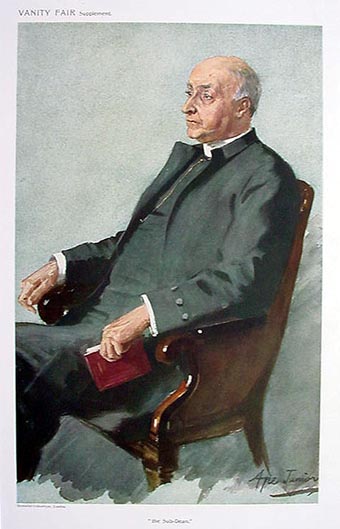 |
| Edgar Sheppard, Curate at Marlow and Hornsey and a canon of St George's Windsor |
Friday, May 27, 2016
Legacy systems in government records
So yesterday got to chatting with FB friends about this article from the BBC: US Nuclear Force Still Uses Floppy Disks.
If you're anything like me, I'm pretty sure the first thing you thought of when you read this headline was Homer Simpson:
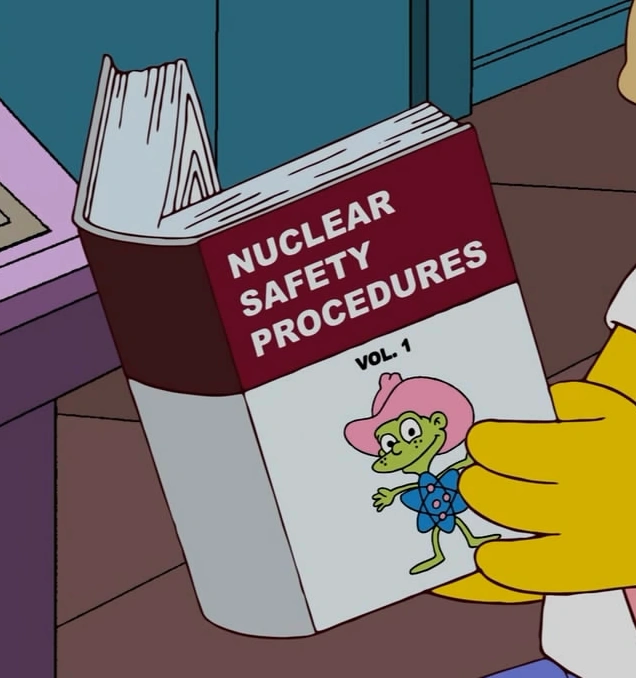
But this isn't just funny trivia for "news of the weird;" there is an actual point: digital records keeping is not as robust and cheap and easy as everyone thinks. That's because most (all!) of us think about digital records in the short term: my credit card payment receipts, my blog posts, my portfolio of html, whatever. Slap 'em on a hard drive, put 'em in GoogleDrive, done. And for most individual purposes, that is OK.
It is not OK, however, when you're talking about records of enduring value. We've probably all ALSO had this experience: "Oh, man, where is that file from 2002, the database of donors?" Oh, it's right here on this ZIP disk. Where's the drive? Um.
Or maybe you do have the drive still. Awesome! So you pop it in, rockin' right along, and then you realize all the files are WordPerfect. Or Lotus 1-2-3. Or VisiCalca. Or file extension .001, whatever that is. Do you still have that program? Heck, does it even still work with your current operating system?
Some libraries and archives (and museums) will keep legacy hardware (and OS and software) up and running so that you can still access historic digital records, but this is a cost-intensive approach, as the article about the nuclear floppies also mentions. Keeping all that old hardware up and running is expensive, especially once you have to do it all in-house, as support is no longer provided by the creators and replacement components may or may not be available.
None of this is insurmountable. You just need to migrate stuff, refresh media, backup like crazy, and so forth, right? Yeah, basically. It can certainly be done--barring any weird restrictions on where and how things can be stored and, especially, duplicated. You don't want to store stuff for the Dept. of Defense containing sensitive/classified info on cloud services mirrored on servers in other countries, for instance. And I think I've mentioned before, some state statutes specifically mandate what formats of certain documents can be considered legally-binding--if only paper and micro-formats, like fiche, are referenced as being an acceptable originals, you may not be able to use your PDFed versions for certain, usually high-stakes, applications. Changing file formats may also have implications for legal admissibility, as it will alter metadata and thus checksums, used to monitor e-records for changes and thus demonstrate maintained authenticity.
Again, this can all be worked around, but NONE of it is cheap. It requires tools (multiple secure and duplicate servers; maybe also cloud space if you can get the security up to snuff) and, most importantly, lots and lots of staff time. Frankly, that's true for both maintaining-as-legacy and converting, but current models suggest that converting to standardized formats, regular conversion, and avoiding physical media (CDs, disks!) ends up being cheaper in the long run, with less data loss. (Exception: converting from analog media, like microfilm, to digital media, has not been shown to be cheaper, for preservation copies. Your access copies can be digital, no problemo: they'll be subject to wear-and-tear, but that also don't have as many security and authenticity issues, because you can always backtrack to your security/preservation copy for, say, a certified copy, if needed. That's why a lot of archives STILL keep master copies of permanent-retention records on film or fiche.)
And so, the US Nuclear Force is still using those floppies. The Treasury, also referenced in the article, is using software written in assembly language code, and thus tied to specific (now antiquated) hardware. State governments are working in obsolete or on-the-cusp software that can't play nicely with modern OS and that are not accessible to constituents. Email retention policies are either non-existent or not understood, enforced, and supported (as in the Hillary Clinton email scandal, which apparently really also involves all former Secretaries of State, as well).
This means two things: our government is not working efficiently, and what should be open records made available to any interested constituent may not be being preserved in any accessible or meaningful format. And I'm not saying this to criticize or ridicule the government or, still less, its employees. In my experience, government employees are doing their best, but in this era of increased emphasis on "smaller government" and cutting budgets, the government and its workers are being less and less empowered to obtain the tools they need to do their jobs. If you can't afford to replace your DOS-based system from the 1980s, your office keeps limping along and trying to provide services even though you can't even run the darn program on a computer with fast (by current standards) processing speeds. If you're an archive whose budget is tied to selling photocopies (cough cough), it's frankly going to be hard to make enough money to buy or rent server space to store e-records on. And if you have nothing to store e-records on, you just plain don't retain e-records. How can you? So those documents, and the associated government accountability and transparency, goes out the window.
Don't get me wrong. I'm not lobbying for, you know, free caviar for all government employees ever Friday or photocopiers with built-in espresso machines for all government offices. But if you want the product, you have to give the workers the necessary tools. Archives budgets in particular are among the first impacted in any round of budget cuts; people need to realize that that means that they simply can't provide an adequate level of service without some very basic necessary tools. No server; no emails; no transparency. And that's bad for all of us.
If you're anything like me, I'm pretty sure the first thing you thought of when you read this headline was Homer Simpson:
But this isn't just funny trivia for "news of the weird;" there is an actual point: digital records keeping is not as robust and cheap and easy as everyone thinks. That's because most (all!) of us think about digital records in the short term: my credit card payment receipts, my blog posts, my portfolio of html, whatever. Slap 'em on a hard drive, put 'em in GoogleDrive, done. And for most individual purposes, that is OK.
It is not OK, however, when you're talking about records of enduring value. We've probably all ALSO had this experience: "Oh, man, where is that file from 2002, the database of donors?" Oh, it's right here on this ZIP disk. Where's the drive? Um.
Or maybe you do have the drive still. Awesome! So you pop it in, rockin' right along, and then you realize all the files are WordPerfect. Or Lotus 1-2-3. Or VisiCalca. Or file extension .001, whatever that is. Do you still have that program? Heck, does it even still work with your current operating system?
Some libraries and archives (and museums) will keep legacy hardware (and OS and software) up and running so that you can still access historic digital records, but this is a cost-intensive approach, as the article about the nuclear floppies also mentions. Keeping all that old hardware up and running is expensive, especially once you have to do it all in-house, as support is no longer provided by the creators and replacement components may or may not be available.
None of this is insurmountable. You just need to migrate stuff, refresh media, backup like crazy, and so forth, right? Yeah, basically. It can certainly be done--barring any weird restrictions on where and how things can be stored and, especially, duplicated. You don't want to store stuff for the Dept. of Defense containing sensitive/classified info on cloud services mirrored on servers in other countries, for instance. And I think I've mentioned before, some state statutes specifically mandate what formats of certain documents can be considered legally-binding--if only paper and micro-formats, like fiche, are referenced as being an acceptable originals, you may not be able to use your PDFed versions for certain, usually high-stakes, applications. Changing file formats may also have implications for legal admissibility, as it will alter metadata and thus checksums, used to monitor e-records for changes and thus demonstrate maintained authenticity.
Again, this can all be worked around, but NONE of it is cheap. It requires tools (multiple secure and duplicate servers; maybe also cloud space if you can get the security up to snuff) and, most importantly, lots and lots of staff time. Frankly, that's true for both maintaining-as-legacy and converting, but current models suggest that converting to standardized formats, regular conversion, and avoiding physical media (CDs, disks!) ends up being cheaper in the long run, with less data loss. (Exception: converting from analog media, like microfilm, to digital media, has not been shown to be cheaper, for preservation copies. Your access copies can be digital, no problemo: they'll be subject to wear-and-tear, but that also don't have as many security and authenticity issues, because you can always backtrack to your security/preservation copy for, say, a certified copy, if needed. That's why a lot of archives STILL keep master copies of permanent-retention records on film or fiche.)
And so, the US Nuclear Force is still using those floppies. The Treasury, also referenced in the article, is using software written in assembly language code, and thus tied to specific (now antiquated) hardware. State governments are working in obsolete or on-the-cusp software that can't play nicely with modern OS and that are not accessible to constituents. Email retention policies are either non-existent or not understood, enforced, and supported (as in the Hillary Clinton email scandal, which apparently really also involves all former Secretaries of State, as well).
This means two things: our government is not working efficiently, and what should be open records made available to any interested constituent may not be being preserved in any accessible or meaningful format. And I'm not saying this to criticize or ridicule the government or, still less, its employees. In my experience, government employees are doing their best, but in this era of increased emphasis on "smaller government" and cutting budgets, the government and its workers are being less and less empowered to obtain the tools they need to do their jobs. If you can't afford to replace your DOS-based system from the 1980s, your office keeps limping along and trying to provide services even though you can't even run the darn program on a computer with fast (by current standards) processing speeds. If you're an archive whose budget is tied to selling photocopies (cough cough), it's frankly going to be hard to make enough money to buy or rent server space to store e-records on. And if you have nothing to store e-records on, you just plain don't retain e-records. How can you? So those documents, and the associated government accountability and transparency, goes out the window.
Don't get me wrong. I'm not lobbying for, you know, free caviar for all government employees ever Friday or photocopiers with built-in espresso machines for all government offices. But if you want the product, you have to give the workers the necessary tools. Archives budgets in particular are among the first impacted in any round of budget cuts; people need to realize that that means that they simply can't provide an adequate level of service without some very basic necessary tools. No server; no emails; no transparency. And that's bad for all of us.
Thursday, May 19, 2016
Colorado open data at the end of the 2016 legislative session
Good and bad news for Colorado open records and open data this session, and also a "good" reminder about working for open data through other channels.
Good news: HB 16-1368 passed! I know, does that sound exciting or what? No, if you'll remember, that was the bill addressing the operation of the Colorado State Archives. You can read the whole confusing mess, from the draft submission, to the votes, to the amendment, to the report of it passing the House and Senate, through the General Assembly's website. (The website is terrible; you have to be sure to go to the drop-down in the middle of the page, where it says "select bill range" and choose "House Bills 1351-1400" and click "Go" to get to the page where you can access all the relevant PDFs.
So that is excellent news! The Archives' just-passed bill did not fix everything (like emails), but it did smooth out a lot of processes and invest the Archives with more capacity to make decisions pertaining to records management, cutting down the bureaucratic maze that used to be part of the records management process. That means more product with less time, and thus money, wasted. Clearly more improvements are needed (e-records!), but this bill was an important step in the right direction, for enabling the State Archives to function more efficiently and to regain some control over the state records for which they are responsible.
But one hand giveth and the other taketh away, so now for bad news: I feel like Rocky Mountain PBS News' article's headline pretty much sums it up: Colorado Legislature Mostly Misses in Improving Government Transparency. It's particularly disappointing with reference to the Judicial branch: notice anything funny about the sentence "State courts have ruled that Colorado’s judicial branch is not covered by CORA[...]?" That's right: "We decided that we are not subject to the law." You can't exactly blame them, but you can blame the other branches of government (particularly the legislative) for not doing their job of checking-and-balancing. But kudos to Sen. John Kefalas (D-Fort Collins) for sponsoring SB 16-037, which attempted to bring up-to-date at least some of the CRS' treatment of digital/e-records. It sounds like Colorado Freedom of Information Coalition is continuing to work on similar compromise legislation for next session, so hopefully that will continue to move forward.
And here's a reminder: even though the legislature is, in many ways, dragging its feet about open records and freedom of information, some other branches of the government are really doing their best to make data available. First and foremost among these is GoCodeColorado, which operates out of the office of the Secretary of State. They run a neat coding challenge annually (hopefully next year I will have advanced enough in programming to participate!). What's particularly interesting and relevant to open data, however, is that the coding challenge involves use of publicly-available government data sets. It's different from open government records, obviously, but also similar. So because GoCodeColorado has an interest in having these data sets available for their coding challenge, they have been working with a number of other agencies to get those agencies' data sets up and freely available, as well as finding and linking to other data sets through nonprofits and the like. So it's a great program, and you should definitely check it out!
Also, shouts-out to OpenColorado (which doesn't look particularly active right now?) and Colorado Data Engine.
Good news: HB 16-1368 passed! I know, does that sound exciting or what? No, if you'll remember, that was the bill addressing the operation of the Colorado State Archives. You can read the whole confusing mess, from the draft submission, to the votes, to the amendment, to the report of it passing the House and Senate, through the General Assembly's website. (The website is terrible; you have to be sure to go to the drop-down in the middle of the page, where it says "select bill range" and choose "House Bills 1351-1400" and click "Go" to get to the page where you can access all the relevant PDFs.
So that is excellent news! The Archives' just-passed bill did not fix everything (like emails), but it did smooth out a lot of processes and invest the Archives with more capacity to make decisions pertaining to records management, cutting down the bureaucratic maze that used to be part of the records management process. That means more product with less time, and thus money, wasted. Clearly more improvements are needed (e-records!), but this bill was an important step in the right direction, for enabling the State Archives to function more efficiently and to regain some control over the state records for which they are responsible.
But one hand giveth and the other taketh away, so now for bad news: I feel like Rocky Mountain PBS News' article's headline pretty much sums it up: Colorado Legislature Mostly Misses in Improving Government Transparency. It's particularly disappointing with reference to the Judicial branch: notice anything funny about the sentence "State courts have ruled that Colorado’s judicial branch is not covered by CORA[...]?" That's right: "We decided that we are not subject to the law." You can't exactly blame them, but you can blame the other branches of government (particularly the legislative) for not doing their job of checking-and-balancing. But kudos to Sen. John Kefalas (D-Fort Collins) for sponsoring SB 16-037, which attempted to bring up-to-date at least some of the CRS' treatment of digital/e-records. It sounds like Colorado Freedom of Information Coalition is continuing to work on similar compromise legislation for next session, so hopefully that will continue to move forward.
And here's a reminder: even though the legislature is, in many ways, dragging its feet about open records and freedom of information, some other branches of the government are really doing their best to make data available. First and foremost among these is GoCodeColorado, which operates out of the office of the Secretary of State. They run a neat coding challenge annually (hopefully next year I will have advanced enough in programming to participate!). What's particularly interesting and relevant to open data, however, is that the coding challenge involves use of publicly-available government data sets. It's different from open government records, obviously, but also similar. So because GoCodeColorado has an interest in having these data sets available for their coding challenge, they have been working with a number of other agencies to get those agencies' data sets up and freely available, as well as finding and linking to other data sets through nonprofits and the like. So it's a great program, and you should definitely check it out!
Also, shouts-out to OpenColorado (which doesn't look particularly active right now?) and Colorado Data Engine.
Programming as a Helping Profession: Social implications of Big Data
I wish I could find the source I read it from, but basically, it is a not-uncommon-assertion that women are underrepresented in programming because women are generally interested in the so-called helping professions, and programming/CS is not generally perceived as a "helping profession." Now obviously we could haggle about why women are disproportionately represented in the "helping professions" (hint: socialization!), but the whole reason I bring this issue up is that I want to make this post about a case where something perceived as very mechanistic and soulless technology does in fact have social implications in an unexpected direction. (Here's an older blog post from EduCause Review about this whole "helping-professions" suggestion, in case you missed it the first time around.)
So now I'm all attuned to "how can tech fields actually function to address social issues, beyond building websites for nonprofits?" Trying to keep an eye out for examples, and a couple of weeks ago, The Atlantic ran the article How Big Data Harms Poor Communities, which is a good start. At first, I was all, "OK, great, someone took a buzzword and problematized it. Next article." But it actually makes some good and non-obvious points.
The author's contention is that Big Data gets disproportionately collected on poor communities, particularly with the indigent and those with run-ins with the law (cue Urban Camping ban controversy, here in Denver, for instance). Moreover, because of how that data is managed (e.g., badly), old data, including that which should have been expunged, may persist, and may impact the lives of real people in the real world, for instance, by impacting credit availability. The author's conclusion is, basically, that without human oversight, Big Data, rather than (or in addition to) providing all the benefits that have been promised, can contribute to systems of oppression that keep poor people trapped in a cycle of poverty and lack-of-opportunity.
Now, can only women do "helping profession"-style programming? Obviously not. But I thought this post was worth sharing, if only for me, as a reminder of one way in which programming can be a tool for social justice, beyond, say, making websites for nonprofits. As I find more examples, I'll try to remember to slap 'em up here. As a fledgling programmer myself, it is good for me to start building a model in my head of how, concretely, programming can be a socially-useful tool, rather than one solely or primarily for military, corporate, or edutainment purposes. (And I don't mention scientific applications anywhere here, because those positions are obviously cool, although they can be more rarefied and abstracted, as well.) And not that women can't be interested in those fields, but the research to date suggests that more women would (might?) be interested in programming/CS with more of a social-good application.
Friday, May 13, 2016
Spoiled rotten bunnies!
Oh my gosh, guys, I have had "blog!" on my to-do list for...all week. And here I am!
Well, only sorta.
'Cause ALSO on my to-do list, ahead of "blog," is "finish the three remaining exercises in your Python class and move along!"
So after 10 hours on one of the three--which is now successfully completed, BTW, after I have exhausted possibly every possible INCORRECT permutation of methods etc., and one correct-but-not-using-the-method-specified--is done. But two are not. So, it's going to be a short blog post today, so I can get back to some Python + JSON fun!
And the topic? Spoiled rotten bunnies! Everyone's favorites!
Actually, it's just a tip: bunnies are very grateful when I remember to grow them some tasty grass inside! Since we have to be careful about not feeding anything that might have been exposed to pesticides or herbicides, it's easiest/safest to grow our own grass. And it's super easy.
We used wheatgrass (this one, from Botanical Interests, specifically); our greenhouse doesn't have wheatgrass this year, but they do have catgrass, which we may try. For the wheatgrass, it is recommended to soak it for something like 8 hours before planting. So start it soaking the night before, then plant the next morning (or evening; whatever floats your boat). I just use a normal ol' potting soil. It takes, oh, maybe a week to have enough grass to feed?
For me, the trickiest thing is planting in such a way that if I give the whole pot to the bunnies to let them graze, they have a tendency to yank the whole plant up, roots and all. Maybe I am not planting them deeply enough, or possibly just sowing too densely (so that a root mat is created, so when one is pulled up many come up together?). Anyway, something to be aware of. As you can see, from this particular pot, I've been trimming for them and then just giving them to the bunns as a snack. This method is working out pretty well, because I've gotten at least three feedings of grass (just keep watering, and leave it by a window!); hopefully we can keep this going for a good long while!
Well, only sorta.
'Cause ALSO on my to-do list, ahead of "blog," is "finish the three remaining exercises in your Python class and move along!"
So after 10 hours on one of the three--which is now successfully completed, BTW, after I have exhausted possibly every possible INCORRECT permutation of methods etc., and one correct-but-not-using-the-method-specified--is done. But two are not. So, it's going to be a short blog post today, so I can get back to some Python + JSON fun!
And the topic? Spoiled rotten bunnies! Everyone's favorites!
 |
| Tasty delicious wheatgrass! |
Actually, it's just a tip: bunnies are very grateful when I remember to grow them some tasty grass inside! Since we have to be careful about not feeding anything that might have been exposed to pesticides or herbicides, it's easiest/safest to grow our own grass. And it's super easy.
We used wheatgrass (this one, from Botanical Interests, specifically); our greenhouse doesn't have wheatgrass this year, but they do have catgrass, which we may try. For the wheatgrass, it is recommended to soak it for something like 8 hours before planting. So start it soaking the night before, then plant the next morning (or evening; whatever floats your boat). I just use a normal ol' potting soil. It takes, oh, maybe a week to have enough grass to feed?
For me, the trickiest thing is planting in such a way that if I give the whole pot to the bunnies to let them graze, they have a tendency to yank the whole plant up, roots and all. Maybe I am not planting them deeply enough, or possibly just sowing too densely (so that a root mat is created, so when one is pulled up many come up together?). Anyway, something to be aware of. As you can see, from this particular pot, I've been trimming for them and then just giving them to the bunns as a snack. This method is working out pretty well, because I've gotten at least three feedings of grass (just keep watering, and leave it by a window!); hopefully we can keep this going for a good long while!
Wednesday, May 4, 2016
Sorry for apologizing all the darn time!
Rats, I did it again. Sorry.
No, wait. NOT SORRY. That is the theme. It is an issue that keeps popping up, so I figured I'd slap it in the ol' blog.
Over-apologizing, specifically by people of the female persuasion.
Just over a month ago, I started (round two) of tennis lessons. I took some a couple of years ago, then I had that job with the long commute and I couldn't make any lessons offered locally, so I dropped it. So I'm getting back into it, which is good, I guess. But guess what? Can I hit the darn ball? Only about 50% of the time. But I can apologize 100% of the time! And I am really, really good at apologizing. When I actually do something bad. When I make a harmless mistake. When I am trying to be non-threatening. When I am trying to "encourage" someone apologize to me--like, if I do it, maybe they'll do it, too?!? Yeah, isn't that something?
So my tennis-lesson colleague, Tara, and I made a pact: no more gratuitous apologizing. If we miss it or shoot it way the heck over the fence and into the road or whatever, we do not apologize. We just walk it off! Unless you actually serve into someone's back. Then you can say "sorry." (Sorry again, Tara.) Old habits die hard. I accidentally apologized, like, five times at our last practice. But I am not sorry about it.
And then this really great article shows up on FB: Raising Confident Girls: When Apologizing is Not a Good Thing (PBS Parents). You can read it yourself; you don't need me to paraphrase it for you. But basically, girls "outperforming" boys at apologizing, and being expected and socialized to do so. And conflict avoidance. LOTS of conflict avoidance.
And then today, I see this nifty article about girls' and women's rock camps in the Twin Cities. (One of my buddies teaches for them.) The article: These Girls Rock (St. Louis Park magazine). So I'm all reading along, happy about rock music and so forth, and then: "The teachers go through the rules of camp on day one, performed in skits, and 'one of the rules is you’re not allowed to apologize,' Case says. 'You say, "I rock!"'"
So now I have something to say when I flub another tennis ball. "I rock!"
In the interest of transparency, however, I was not listening to rock music when writing this. I was listening to yodeling.
No, wait. NOT SORRY. That is the theme. It is an issue that keeps popping up, so I figured I'd slap it in the ol' blog.
Over-apologizing, specifically by people of the female persuasion.
Just over a month ago, I started (round two) of tennis lessons. I took some a couple of years ago, then I had that job with the long commute and I couldn't make any lessons offered locally, so I dropped it. So I'm getting back into it, which is good, I guess. But guess what? Can I hit the darn ball? Only about 50% of the time. But I can apologize 100% of the time! And I am really, really good at apologizing. When I actually do something bad. When I make a harmless mistake. When I am trying to be non-threatening. When I am trying to "encourage" someone apologize to me--like, if I do it, maybe they'll do it, too?!? Yeah, isn't that something?
So my tennis-lesson colleague, Tara, and I made a pact: no more gratuitous apologizing. If we miss it or shoot it way the heck over the fence and into the road or whatever, we do not apologize. We just walk it off! Unless you actually serve into someone's back. Then you can say "sorry." (Sorry again, Tara.) Old habits die hard. I accidentally apologized, like, five times at our last practice. But I am not sorry about it.
And then this really great article shows up on FB: Raising Confident Girls: When Apologizing is Not a Good Thing (PBS Parents). You can read it yourself; you don't need me to paraphrase it for you. But basically, girls "outperforming" boys at apologizing, and being expected and socialized to do so. And conflict avoidance. LOTS of conflict avoidance.
And then today, I see this nifty article about girls' and women's rock camps in the Twin Cities. (One of my buddies teaches for them.) The article: These Girls Rock (St. Louis Park magazine). So I'm all reading along, happy about rock music and so forth, and then: "The teachers go through the rules of camp on day one, performed in skits, and 'one of the rules is you’re not allowed to apologize,' Case says. 'You say, "I rock!"'"
So now I have something to say when I flub another tennis ball. "I rock!"
In the interest of transparency, however, I was not listening to rock music when writing this. I was listening to yodeling.
Wednesday, April 27, 2016
A day in the life of an unemployed programming self-learner
Right, so I'm working through some great programming "prep"/intro courses (see below!) provided by a number of bootcamps, and one thing I just found and enjoyed was a handful of articles of the type "a day in the life of....", to give you an idea of what you do as a developer.
For samples, here are ones for software developer and front-end developer (both at larger and established companies). And I love this one, that focuses on the improvisational nature of work in really any field. I am delighted with how he talks about "other tasks" that "add value in a more general way," which I think is something that is often overlooked in nearly all workspaces.
But for fun, here's a day in the life of a self-directed-software-programming-student-who-is-also-unemployed:
Official day starts at 7: Spouse heads to work, I go supervise bunny rabbit play time, so the untrustworthy little tyrants don't eat all the carpets. Also good for a first email-check and cup of coffee (1 of 2-4)
Spend around 3-4 hours on (pick one or more):
For samples, here are ones for software developer and front-end developer (both at larger and established companies). And I love this one, that focuses on the improvisational nature of work in really any field. I am delighted with how he talks about "other tasks" that "add value in a more general way," which I think is something that is often overlooked in nearly all workspaces.
But for fun, here's a day in the life of a self-directed-software-programming-student-who-is-also-unemployed:
 |
| I am already qualified to be a programmer, based on coffee consumption. Tasty Sisterhood Solidarity coffee from Santa, err, I mean SERVV Fair Trade. |
Spend around 3-4 hours on (pick one or more):
- Coursera: Currently doing the Python for Everyone series through University of Michigan; have also done chunks of the intro to programming the OIT series from UC-Irvine, the Web Design for Everybody series from University of Michigan, the software product management series from University of Alberta, and the business analytics series ("Excel to MySQL....") from Duke. I plan to continue working on the courses in these series, and I have stacks more in the queue (John Hopkins' Ruby on Rails and data science specializations are in the crosshairs). I will never get caught up; this is why I never get bored.) I'll admit, I am doing the "free" versions of all of these, so no certificates, and in the Duke one, I don't even get to do the quizzes. I am just not sure that the certificates will hold much weight with future potential employers; I am in it for the learning and for being exposed to new ideas.
- Viking Code School Prep
- Ada Development Academy Jump Start
- CodeAcademy (very little of this, to date, honestly)
- StudioCode (yes, it's for kids, but I was starting from pretty much ground zero, so it was and is a good tool. I cannot tell you how much I love the happy little bee they use for teaching sequences, for loops, etc.)
(Additional learning resources that are also in the queue: CodeWars, anything else I can find through Made with Code and TED's 10 Places Where Anyone Can Learn to Code, possibly something from Udacity, and W3Schools, which I used when learning HTML the first time around, in ca2001.)
Maybe also do a little professional-oriented reading: Code Complete, HeadFirst SQL, or Learning Python. Or one of the open-source books referenced by one of my Coursera courses.
Then spend another 2-3 hours on "around the house" chores, because, let's face it, when you're the unemployed one, you are the one who does the grocery shopping, yard work, fence-fixing, grout-sealing, shrub-trimming, dinner-cooking, bathroom-cleaning, peephole-installing, bike-fixing, etc. (Here's Judy Brady on why we all would like a wife, please.)
Maybe also do a little professional-oriented reading: Code Complete, HeadFirst SQL, or Learning Python. Or one of the open-source books referenced by one of my Coursera courses.
Then spend another 2-3 hours on "around the house" chores, because, let's face it, when you're the unemployed one, you are the one who does the grocery shopping, yard work, fence-fixing, grout-sealing, shrub-trimming, dinner-cooking, bathroom-cleaning, peephole-installing, bike-fixing, etc. (Here's Judy Brady on why we all would like a wife, please.)
And also exercise, because I figure (a) it's good for me (duh), and (b) since I'm kind of a trophy wife right now, I better start, ahem, trying to develop some of the qualifications? Not my forte.
Time permitting, other side projects include blogging (!!), reading ALL THE THINGS, and doing some advocacy for...good causes. Like public records. And trying to get a small business off the ground (instant vegan hot cocoa, everybody! But we have hit a snag and that's on hold.). And doing some contract writing for a neighbor, and hopefully also through Upwork.
And sometimes I still break down and apply for librarian/archivist/museum jobs, because moving on is hard. But I'm trying to stay committed to my new path and not let myself get side-tracked.
And some tunes from my learn-to-program playlist?
And some tunes from my learn-to-program playlist?
Friday, April 22, 2016
Racial "care gap" in healthcare
PBS Newshour ran a great piece April 5, entitled "Is there a racial 'care gap' in medical treatment?" I especially love when Dr. Satin, one of the interviewees, summed it up: "I teach the medical students, look, it’s not your — it’s not your fault that you have these implicit biases. You grew up in society. We all have these.
But now that you know, it’s your responsibility. And we have some interventions to try to reverse [these implicit biases]."
This segment was of particular interest to me because I've just been reading Medical Apartheid: The Dark History of Medical Experimentation on Black Americans from Colonial Times to the Present (Harriet A. Washington), and there were a lot of resonances. For instance, that whole "people of color feel pain less than white people" is apparently long-standing: it's referenced in both the book and the PBS segment.
The book was super interesting, and I would certainly recommend it--although I'd recommend it "with a grain of salt." I think it's one of those books, sort of like Gloria Anzaldúa's Borderlands/La Frontera, which are groundbreaking and true-in-sum, although less true in detail. What now? Well, the overarching narrative is broadly true; some of the specific examples are suspect, not fully elaborated, and/or undocumented and bordering on conspiracy theories.
I hate that, because it just makes the books less convincing to--and this sounds damning--"people who are sticklers for the facts" and people who just plain aren't inclined to believe you and will take any excuse not to. Anzaldúa way-the-heck overstates the length of American occupation; that doesn't mean that Hispanics/Latin@s/Chican@s should be marginalized as second-class-citizens, but it does mean that her SPECIFIC statements are not exactly literally true, although the big-picture she presents is valid.
Similarly, Washington makes some SPECIFIC claims that are a little squishy--for instance, page 235, wherein she claims that people of color, specifically people of African descent, cannot generally be treated with total-body irradiation for widespread cancer, because it is harder to find a matching bone-marrow transplant donor for them, and the TBI kills the patient's bone marrow and will kill them without a bone marrow transplant. Based on my recent reading of The Emperor of All Maladies, however, though, it sounds like this doesn't entirely hold water because one can self-donate bone marrow (e.g., it's extracted prior to your chemo or irradiation and then transplanted back into you post-treatment). My inclination is, if it's appearing in a a book written for a lay audience, she should probably also be aware of it, given her academic credentials and affiliations. Obviously I'm not a doctor, but again, if I can learn about it through a book for a lay audience and she acts like it's totally not even a reality, I am unsure if there is some reason that I'm missing that she is just not explaining, or if she's ignoring this possibility in order to hammer on her point--that black folks don't often reap the benefits of their participation in medical research/experimentation--more.
I also found her documentation to be uneven, which was a real shame. Again, I accept her premise, but it would be a much more compelling argument if I could refer to the same sources she's working from. She does footnote a lot, but often, not the things that I really needed to see cited.
And then, of course, there are gaps--intentional and otherwise--in the archival record. When the author questions the veracity of the archival record in the case of secret testing of biological or chemical agents on predominantly black communities, it is entirely possible that she is correct and that the records were not kept, were falsified, or were intentionally destroyed. I mean, I've been an archivist and I've been a (student) anthropologist, and yes, it's entirely reasonable that things that weren't considered "important," like informed consent from people of color, would not have been recorded or retained or even asked for--and the latter is her contention. But when you admit that the documentation just isn't there, it is really hard not to step into conspiracy theorizing. And I'm not saying she does, but I just wish she had more rigorously cited documents for issues for which records had not been--from her representation--intentionally destroyed; it would make the overall argument better able to bear the parts that cannot reasonably be documented due to the destruction of records.
(For more on the "squishiness" of the archival record, I would totally recommend Ann Laura Stoler's Along the Archival Grain: Epistemic Anxieties and Colonial Common Sense. And obligatory shout-out to Foucault on varieties of knowledge, including that which is discredited.)
One final wish: The book repeatedly refers to its partner website. I tried to go there, hoping I'd find more...anything. More resources, a "suggested reading" list, etc. But it looks like the website is no longer maintained--I couldn't find it, at all. (Based on what I found from Wayback Machine/Internet Archive, the site was only harvested between 2007 and 2012, so I think it's probably really and truly gone: here's one of two times the site was crawled in 2011).
So, in summary and in conclusion, high marks for drawing attention to a very serious social issue, historically and through the present day. But less enthusiasm for less-than-rigorous citing, which I guess is fair game for a book for general (rather than academic) audiences, but which I personally felt detracted from the power of the work as a whole.
This segment was of particular interest to me because I've just been reading Medical Apartheid: The Dark History of Medical Experimentation on Black Americans from Colonial Times to the Present (Harriet A. Washington), and there were a lot of resonances. For instance, that whole "people of color feel pain less than white people" is apparently long-standing: it's referenced in both the book and the PBS segment.
The book was super interesting, and I would certainly recommend it--although I'd recommend it "with a grain of salt." I think it's one of those books, sort of like Gloria Anzaldúa's Borderlands/La Frontera, which are groundbreaking and true-in-sum, although less true in detail. What now? Well, the overarching narrative is broadly true; some of the specific examples are suspect, not fully elaborated, and/or undocumented and bordering on conspiracy theories.
I hate that, because it just makes the books less convincing to--and this sounds damning--"people who are sticklers for the facts" and people who just plain aren't inclined to believe you and will take any excuse not to. Anzaldúa way-the-heck overstates the length of American occupation; that doesn't mean that Hispanics/Latin@s/Chican@s should be marginalized as second-class-citizens, but it does mean that her SPECIFIC statements are not exactly literally true, although the big-picture she presents is valid.
Similarly, Washington makes some SPECIFIC claims that are a little squishy--for instance, page 235, wherein she claims that people of color, specifically people of African descent, cannot generally be treated with total-body irradiation for widespread cancer, because it is harder to find a matching bone-marrow transplant donor for them, and the TBI kills the patient's bone marrow and will kill them without a bone marrow transplant. Based on my recent reading of The Emperor of All Maladies, however, though, it sounds like this doesn't entirely hold water because one can self-donate bone marrow (e.g., it's extracted prior to your chemo or irradiation and then transplanted back into you post-treatment). My inclination is, if it's appearing in a a book written for a lay audience, she should probably also be aware of it, given her academic credentials and affiliations. Obviously I'm not a doctor, but again, if I can learn about it through a book for a lay audience and she acts like it's totally not even a reality, I am unsure if there is some reason that I'm missing that she is just not explaining, or if she's ignoring this possibility in order to hammer on her point--that black folks don't often reap the benefits of their participation in medical research/experimentation--more.
I also found her documentation to be uneven, which was a real shame. Again, I accept her premise, but it would be a much more compelling argument if I could refer to the same sources she's working from. She does footnote a lot, but often, not the things that I really needed to see cited.
And then, of course, there are gaps--intentional and otherwise--in the archival record. When the author questions the veracity of the archival record in the case of secret testing of biological or chemical agents on predominantly black communities, it is entirely possible that she is correct and that the records were not kept, were falsified, or were intentionally destroyed. I mean, I've been an archivist and I've been a (student) anthropologist, and yes, it's entirely reasonable that things that weren't considered "important," like informed consent from people of color, would not have been recorded or retained or even asked for--and the latter is her contention. But when you admit that the documentation just isn't there, it is really hard not to step into conspiracy theorizing. And I'm not saying she does, but I just wish she had more rigorously cited documents for issues for which records had not been--from her representation--intentionally destroyed; it would make the overall argument better able to bear the parts that cannot reasonably be documented due to the destruction of records.
(For more on the "squishiness" of the archival record, I would totally recommend Ann Laura Stoler's Along the Archival Grain: Epistemic Anxieties and Colonial Common Sense. And obligatory shout-out to Foucault on varieties of knowledge, including that which is discredited.)
One final wish: The book repeatedly refers to its partner website. I tried to go there, hoping I'd find more...anything. More resources, a "suggested reading" list, etc. But it looks like the website is no longer maintained--I couldn't find it, at all. (Based on what I found from Wayback Machine/Internet Archive, the site was only harvested between 2007 and 2012, so I think it's probably really and truly gone: here's one of two times the site was crawled in 2011).
So, in summary and in conclusion, high marks for drawing attention to a very serious social issue, historically and through the present day. But less enthusiasm for less-than-rigorous citing, which I guess is fair game for a book for general (rather than academic) audiences, but which I personally felt detracted from the power of the work as a whole.
Tuesday, April 12, 2016
Vegan Stouts from Colorado Microbreweries
So the only beer worth drinking, or making cupcakes with, is stout. (OK, that is a SLIGHT exaggeration, but stouts are far and away the best beers. Fairly certain that that has been demonstrated through science.)
But it's hard getting easier to find a vegan stout! The best stouts are, sadly, milk stouts, which are disqualified from the get-go because of the milk sugar. Many non-milk stouts are filtered using animal membranes or derivatives (isinglass), making it hard to know which ones are vegan and which ones not--although my inquiries with area brewers have suggested that folks are tending away from these methods, and that seems to be borne out by how very many Colorado microbrewed stouts I have been finding!
As a selfish AND public service, then, I've taken it upon myself to contact Colorado microbreweries--because hooray for buying local!--to see which of them offer vegan stouts.
I just started on this today, April 12, and haven't even gotten through my entire list of microbreweries yet. However, some of our local brewmasters are on top of their emails, so I already have some results to report! I will continue updating this page as I get more responses.
Vegan Stouts from Colorado Microbreweries
- Alpine Dog Brewery's Nitro! Blind Sherpa American Stout
- Aspen Brewing Company's 10th Mountain Imperial Stout (seasonal)
- Avery Brewing Co. Out of Bounds Stout, Mephistopeles Stout (seasonal), The Czar Imperial Stout (seasonal), Uncle Jacob's Stout (Bourbon-Barrel Aged Stout, seasonal)
- Baere Brewing Company's A Winter Stout
- Beer by Design (no stout specifically listed, but looks like there's one on their sampler, and their representative indicated that all their beers are vegan)
- Big Beaver Brew's Whiskey Dick Stout and Stubble Stout
- Black Bottle Brewery's Liquid Metal (Imperial Rye Stout)
- Black Shirt Brewing Black Beacon Sound Nitro
- Bootstrap Brewing Worthog Stout
- Breckenridge Brewery's Oatmeal Stout
- BREW Pub & Kitchen: all stouts crafted to date have been vegan; they are seasonal and the style has varied
- Bristol Brewing Company's Winter Warlock Oatmeal Stout (seasonal)
- Broken Compass Brewery's Chocolate Coffee Stout
- BRU Boulder's Osito Stout and Snow Angel Imperial Stout
- Buckhorn Brewers' Storm Mountain Stout (link is to FB page; their website is under development)
- Bull & Bush Brewery's Stonehenge Stout, Genessee Mountain Rainbow Espresso Oatmeal Stout, and Legend of the Liquid Brain Imperial Stout (the last is seasonal)
- Call to Arms' Breeze's Mom (seasonal: the person I spoke to recommended their Oats and Hose Porter as a year-round close-to-stout)
- Cannonball Creek Brewing Company's Battlecat American Stout (seasonal/rotating)
- Carver Brewing Company's Iron Horse Oatmeal Stout, Imperial Stout, and Irish Stout
- Cerebral Brewing's Here Be Monsters Russian Imperial Stout
- City Star Brewing's Night Watchman Stout
- CooperSmith's Pub & Brewing's Local Mocha Stout, A Horse Named Brett, Welcome to the Dark Side Stout, Wild Horse Bourbon Barrel Stout, Tequila Barrel Chili Stout, Tequila Barrel Stout, Blue Corn Bourbon Stout, Cognac Stout, Stout avec chicory, Bourbon Barrel Stout, Irish Stout, Imperial Destroyer Stout, and Horsetooth Stout
- Copper Club Brewing Company's El Guapo Stout
- Copper Kettle Brewing Company's Mexican Chocolate Stout
- Crazy Mountain Brewery's Snowcat Coffee Stout (seasonal)
- Crow Hop Brewing's Sleeping Owl Stout
- Dead Hippie Brewing Company's Dead Sexy Sweet Stout
- Declaration Brewing Company's Bus Stout (not on their website as of 5/6/2016, but when I contacted them, they told me about it)
Monday, April 11, 2016
Pining for the Fjords
Unlike the majestic Norwegian Blue Parrot in this deservedly-famous sketch, I am, in fact, pining for the fjords.
Well, these fjords.
I worked in Southeast Alaska for several summers, and loved it. Tried to stay longer; was still at the point in my career where I thought I would get back there long-term by, you know, getting my qualifications and some experience and then taking a job at, say, the State Museum in Jueanu. But the only hire folks who are already residents, which I've always thought is a terrible policy: the most qualified person presumably IS one who is not there already (given how few institutions there are), and it always struck me as crazy to expect someone (e.g., me) to just MOVE UP there with no job and work wherever I could get a job and just hang out and hope for something relevant to open up. But that was the procedure, I guess.
But anyway, summer is coming on in Colorado, and I'm fighting snakes and yellowjackets and European paper wasps and bunnies who fall in window wells, and soon it will be hot. People laugh at me, but I'm that guy who is all, "Man, spring is the worst! I hate it almost as much as I hate rainbows and puppies!" (For the record, I do not hate rainbows or puppies.)
Anyway, as I try to prepare myself for...6 months of heat, I thought I'd put together a post of things I like that are, you know, related to the fjords and the Great Land and cool weather and days-of-rain. Maybe someone else out there in internet-land will also enjoy them.
 The Shipping News: I want to live in this place. Even though it's on the "wrong" coast. And Quoyle, bless his heart. "Stupid man does wrong thing again." I feel ya, buddy.
 Studio Tuesday: for all your notecard and matted print needs. Also on the "wrong" coast.
Stan Rogers: also ALSO from/about the "wrong" coast
 So I'm making maple cupcakes and missing winter already. And I guess we'll be trying this recipe for vegan faux-smoked salmon soon!
Someone smart is going to point this out: maybe I should try Newfoundland and/or the Maritime Provinces, since that is actually more where these things are from. Way ahead of you! It is on the list. But in the meantime, it's still an aesthetic I love, and reminds me of how I felt about my time up north. Now if I could just find a perfume/cologne that smells a little more like cedar....and yes, I've tried.
Well, these fjords.
 |
| Evening coming on, over the Chilkat River |
I worked in Southeast Alaska for several summers, and loved it. Tried to stay longer; was still at the point in my career where I thought I would get back there long-term by, you know, getting my qualifications and some experience and then taking a job at, say, the State Museum in Jueanu. But the only hire folks who are already residents, which I've always thought is a terrible policy: the most qualified person presumably IS one who is not there already (given how few institutions there are), and it always struck me as crazy to expect someone (e.g., me) to just MOVE UP there with no job and work wherever I could get a job and just hang out and hope for something relevant to open up. But that was the procedure, I guess.
But anyway, summer is coming on in Colorado, and I'm fighting snakes and yellowjackets and European paper wasps and bunnies who fall in window wells, and soon it will be hot. People laugh at me, but I'm that guy who is all, "Man, spring is the worst! I hate it almost as much as I hate rainbows and puppies!" (For the record, I do not hate rainbows or puppies.)
Anyway, as I try to prepare myself for...6 months of heat, I thought I'd put together a post of things I like that are, you know, related to the fjords and the Great Land and cool weather and days-of-rain. Maybe someone else out there in internet-land will also enjoy them.


Stan Rogers: also ALSO from/about the "wrong" coast

Someone smart is going to point this out: maybe I should try Newfoundland and/or the Maritime Provinces, since that is actually more where these things are from. Way ahead of you! It is on the list. But in the meantime, it's still an aesthetic I love, and reminds me of how I felt about my time up north. Now if I could just find a perfume/cologne that smells a little more like cedar....and yes, I've tried.
Friday, April 8, 2016
Colorado Revised Statutes & Government E-Records (Part 3 of 3)
The last post tried to address the email question while also explaining the way archives in general work, and why preserving and providing access to emails is not as cheap and easy as you might expect, and as we might all want.
This post addresses e-records that are NOT emails and that are not non-text formats (e.g, video or audio recordings). Maybe I'll do a part 4 of 3 (hah) on audio and visual recordings, because there are a lot of those from legislative sessions, but those are actually good-to-moderate news, because there is some funding for the audio recordings' preservation, so things are not as bleak on that front. They are, however, HUGE files by comparison with emails and other little textual files, so they add up even faster. We're talking hundreds of terabytes of space, and counting.
But "anywhoozle" (as the State Archivist says), the point here is textual digital records other than emails. Maybe they were filed digitally ("efiled"), or maybe they were filed in hard copy but the originating agency decided to digitize them and store them that way, maybe retaining the paper originals or maybe not.
"You're throwing WHAT away???"
The reason I'm addressing them in this series is because they are touched upon in the article linked to with all the email (justified) hubbub: "Records Manager Paul Levit said the office has accumulated so many, he is now trying to return some to the agencies that sent them."
So that sounds pretty weird without any context, am-I-right?
Prior to me leaving my post at the State Archives in November 2015, I was working on the e-records submitted by originating agencies, including state-level agencies, the court systems, county government, local/municipal government, public school districts, and special districts (mostly fire protection districts, some conservation districts, etc.) These are the records that Paul is now continuing to return to originating agencies.
Wait, what? If e-records are already in trouble due to their inherently fragile nature, why are you just throwing up your hands??
Well, that's not quite it.
See, here's the issue: those records are not REALLY being preserved in the old system, because the records are not being submitted in any useful order, with any relevant metadata, in acceptable formats or on durable media. Something saved in a proprietary format without retaining the system in legacy format is the same, basically, as not retaining the document in the first place. Burning it to a CD and then sending that to the State Archives, who puts it in a box (because they have no funding for a server), is not a viable strategy for preservation. So that is the old system that we were shutting down. And believe you me, it was POPULAR.
Security Copies
And let me be very clear here: these records are being sent as "security copies," meaning they're supposed to be a back up in case something happens to the main version, still held at the originating agency. That's problematic, because nonstandardized files with no metadata sitting on CDs and other nonpermanent media are not going to make good backups, so it gives a false sense of security.
It gets even more problematic when, in fact, originating agencies are not treating them like security copies: in some instances, they're treating them like the ONLY version. So they scan some documents, burn it on a CD, mail it in, and then trash the original documents. That is problematic because (a) it's not adequate preservation, (b) it doesn't provide for access, and (c) as the post on statutes illustrated, it is POSSIBLE that digitized versions of documents may not be considered official in some contexts (e.g.,C.R.S. 24-80-107 ). Of course, this last issue needs to be addressed in statute because so many records today are "born digital"--they are digital from creation, rather than created in hard copy and later migrated to digital.
So the reason e-records are getting sent back is because the submitted e-records cannot be adequately stewarded in their submitted state. Without a server and a lot of staff time, there is no way to keep these records safe, secure, and accessible. The State Archives implemented a "security copies MUST be on microfilm" policy (PDF here) as an attempt to find a middle ground. Depositing security copies with the State Archives is not mandatory; agencies may choose to steward their records in any format, on their own responsibility, but if they choose to submit security copies, they must be on microfilm, which at least can sit in a box for 200 years and still be readable when you pull it out. So e-records are being sent back to originating agencies because it's a waste of space and an untruth to call a CD in a box an "archival preservation copy."
Is that good enough?
Not at all. Permanent records of the state, regardless of format, are important and should be preserved for their stated retention period. (See previous post for explanation.) But you obviously cannot preserve a digital record if you don't have a server to put it on; you can't ensure its authenticity if you don't have the staff to do the maintenance and security; you can't provide access if you don't have "intellectual control" through cataloging and the creation of appropriate metadata.
State Archives has the expertise to provide these services, especially as they begin to hire more people with qualifications in Library & Information Science and Archives Science. They do not, however, have the budget or the political clout to get these ducks in a row. The sad thing is, it's the citizens of Colorado who will lose out if this situation isn't rectified. It's already happening: while I worked at the State Archives, people would contact us for records, and we would be unable to provide them.
And you feel like a monster when you tell someone, "Sorry, I can't give you a copy of your vocational school transcript so that you can get your business licensed in another state. It's just not here." "Sorry, I can't help you get your retirement money, because the separation agreement that explains how that's divided is just not here." This will be an increasingly-common problem unless something is done soon. (And in case you think I'm being hysterical: Google agrees that this is an issue.)
So what now????
Archives everywhere are working on figuring out strategies to ensure the preservation of records. Technical best standards are firming up. There are contingency plans. But again, the number one thing that concerned citizens can do is to let your legislators know that this is important to you: that archives aren't just a "nice thing" to have; they are critical for government's functioning and transparency and for and citizen oversight. And in the meantime, I would try to keep copies of your relevant official documents yourself, just in case.
If you want to read more
If you care to read more, you are welcome to peruse a report that Audio Archivist Aly Jabrocki and I wrote, back when I was still with the State Archives. This was part of the Society of American Archivists' Jump In initiative, encouraging repositories of all sizes to start dealing with e-records. 'Cause the first step is knowing what you have, and what you need to deal with.
Subscribe to:
Comments (Atom)